
Explore Boston · Part One
The Boston 20: Top Things to Do
The Boston 20 are the city’s classics: the walks, rooms, rides and meals a first visit should not skip and a return visit is glad to repeat. They run from the Freedom Trail to a proper pint, and most cost nothing. Each comes with a verdict, the facts that change a plan and the pages of the full entries.
- Walk the Freedom Trail
- Explore Faneuil Hall
- See the Founding-Era Sites
- Tour the Massachusetts State House
- Wander Beacon Hill & Acorn Street
- Climb the Bunker Hill Monument
- Ride the Swan Boats
- Stroll Newbury Street & Back Bay
- Tour the Boston Public Library
- Eat Your Way Through the North End
- Skate on Frog Pond
- Spend Time Along the Charles
- Ferry to the Harbor Islands
- Walk the Seaport
- Take a Boston Duck Tour
- Taste Boston’s Seafood
- Catch a Game at Fenway Park
- Explore Boston’s Museums
- Walk the Emerald Necklace
- Settle Into an Irish Pub
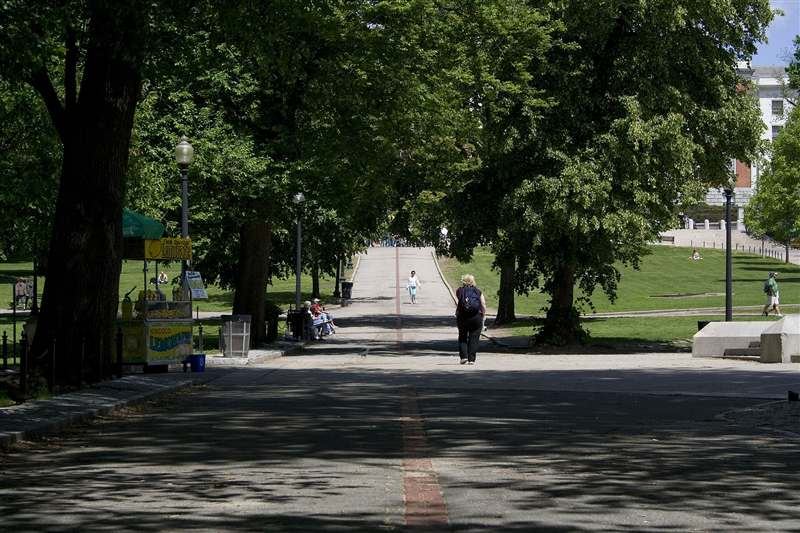
Walk the Freedom Trail
Follow the red line in the brick 2.5 miles from Boston Common to Charlestown — 16 revolutionary sites, ending at the Bunker Hill Monument, one stop after the deck of the USS Constitution.
Boston’s best idea might be its simplest: paint a red line through the city and let it do the talking. The Freedom Trail links 16 official sites — churches, burying grounds, meeting halls — along 2.5 miles of ordinary sidewalk, from Boston Common to the Bunker Hill Monument, with no bus and no ticket required.
The downtown stretch is the dense one: the State House dome and the Granary Burying Ground, where Samuel Adams, John Hancock and Paul Revere lie a few steps apart, arrive in the first half mile. Do it in halves: downtown in the morning, a long lunch in the North End, then Charlestown. The trail’s own order puts the USS Constitution, a 1797 warship still in commission, at stop 15 and the monument last; reverse the two, climb the monument while your legs are fresh and finish on the ship’s deck.
Cost Free to walk; $5–$18 at the ticketed sites · Time About 1.5 hours of walking; half a day with stops inside · Hours Any time; USS Constitution Wed–Sun 10 a.m.–4 p.m. · Hours and prices
- Boarding the Constitution is free too; adults need photo ID at its security check. The ticketed interiors are King’s Chapel ($5), the Paul Revere House ($6), Old North Church ($10) and the Old State House with Old South Meeting House ($18 for both).
- Wear walking shoes: 2.5 miles of brick, cobblestone and one proper hill. Return by the Charlestown ferry from the Navy Yard ($2.40) or from North Station.
Main entries The Freedom Trail · Granary Burying Ground · USS Constitution · Bunker Hill Monument
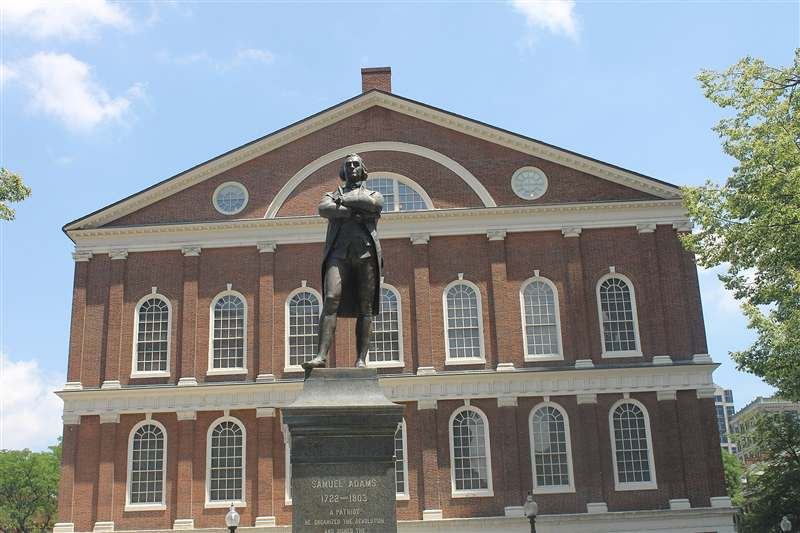
Explore Faneuil Hall
The 1742 hall where the Revolution found its voice now anchors Boston’s liveliest marketplace — grasshopper weathervane on top, street performers out front.
Yes, it’s touristy. It has also been the city’s public square since 1742, which buys a building some slack. Faneuil Hall earned the nickname “Cradle of Liberty” hosting the town meetings that talked Boston into revolution, and the marketplace out front has been feeding and entertaining crowds ever since.
Climb to the Great Hall for a free ranger talk, then look up for the gilded grasshopper weathervane. Behind the hall, Quincy Market’s long food aisle runs from chowder to cannoli, and street performers still work the cobblestones. Then use the location: the Freedom Trail runs past the door, the waterfront is a 5-minute stroll and the North End’s pastry counters are barely farther.
Cost Free · Time An hour; longer with lunch in Quincy Market · Hours Great Hall Wed–Sun 10 a.m.–4:30 p.m.; the market Mon–Sat 10 a.m.–9 p.m., Sun 11 a.m.–7 p.m. · Hours and prices
- Ranger talks run Wednesday–Sunday, hourly at half past, 10:30 a.m.–3:30 p.m.; the Great Hall closes now and then for city events.
- Go before late morning for a quiet Great Hall and a colonnade without the lunch crush.
Main entries Faneuil Hall · Quincy Market
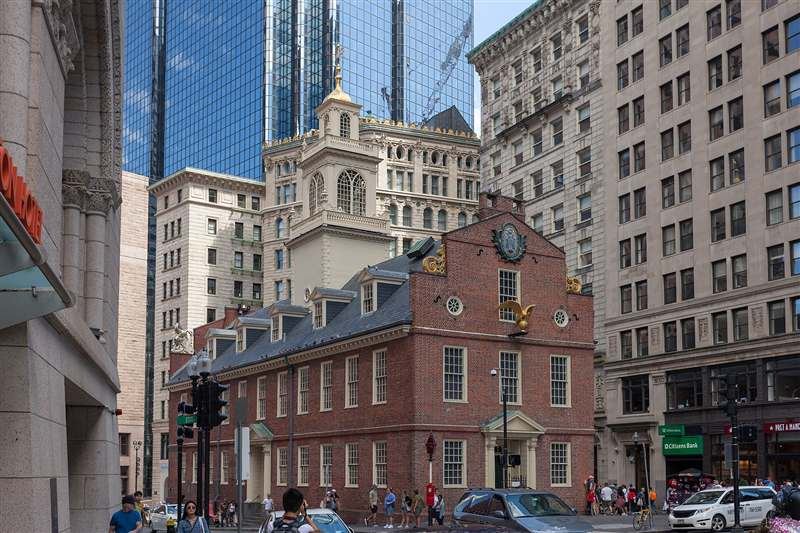
See the Founding-Era Sites
Beyond the trail’s greatest hits: the balcony where Boston first heard the Declaration, the pews where the Tea Party boiled over, Paul Revere’s front door.
Everyone photographs Faneuil Hall and moves on. The better day is the deep cut: founding-era rooms, graves and doorsteps packed into a few downtown blocks, where the Revolution stops being a mural and turns back into places where people quarreled, mourned and lost their tempers.
Start at the Old State House, built in 1713 and now boxed in by towers. Boston first heard the Declaration of Independence read from its balcony, and a ring of cobblestones outside marks the Boston Massacre of 1770. A few blocks away, the meetings that led to the Tea Party boiled over in the Old South Meeting House. Then step into King’s Chapel’s box pews and walk the red line to the Paul Revere House, built around 1680 and small enough that its kitchen collapses the distance between legend and household.
Cost Free outdoors; $5–$18 per interior; Tea Party Ships from $36 · Time Half a day · Hours Old State House daily from 10 a.m.; Paul Revere House daily 10 a.m.–5:15 p.m. (to 4:15 p.m. in winter); King’s Chapel Mon–Sat 10 a.m.–5 p.m. (shorter in winter) · Hours and prices
- Everything downtown sits within a 15-minute walk; the Tea Party Ships on Fort Point Channel are the one detour.
- The Old State House and Old South Meeting House share an $18 ticket, King’s Chapel asks $5 and the Paul Revere House $6; the Tea Party Ships tour is timed, so book it ahead.
Main entries Old State House · Old South Meeting House · King’s Chapel · Paul Revere House · Boston Tea Party Ships & Museum
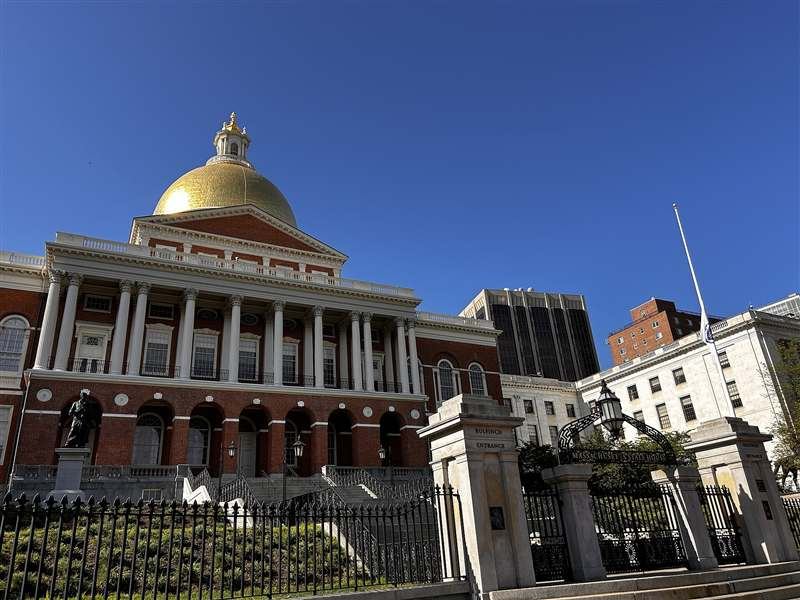
Tour the Massachusetts State House
Charles Bulfinch’s 1798 capitol crowns Beacon Hill with a gilded dome, a carved Sacred Cod, and free weekday tours of a working State House.
The gold dome you keep spotting from across the city belongs to the Massachusetts State House, finished in 1798 to a design by Charles Bulfinch and still where the Commonwealth governs itself. It sits at the crest of Beacon Hill looking down over the Common, which is exactly where a state that thinks this much of itself would put it.
Inside, the House of Representatives keeps the Sacred Cod overhead, a carved wooden codfish that has presided over debates for more than two centuries; its one famous kidnapping, a student prank, threw the chamber into an uproar until the fish came home. Then cross Beacon Street to Augustus Saint-Gaudens’s bronze memorial to Robert Gould Shaw and the 54th Massachusetts Regiment, and give it the unhurried minutes it deserves.
Cost Free · Time An hour · Hours Mon–Fri 8:45 a.m.–5 p.m.; closed weekends and holidays · Hours and prices
- Free guided tours run on weekdays, 10 a.m.–3:30 p.m.; book ahead at 617-727-3676, and expect a security screening.
- On weekends and holidays the dome, the steps and the Shaw Memorial still reward the climb.
Main entries Massachusetts State House · Boston Common
Wander Beacon Hill & Acorn Street
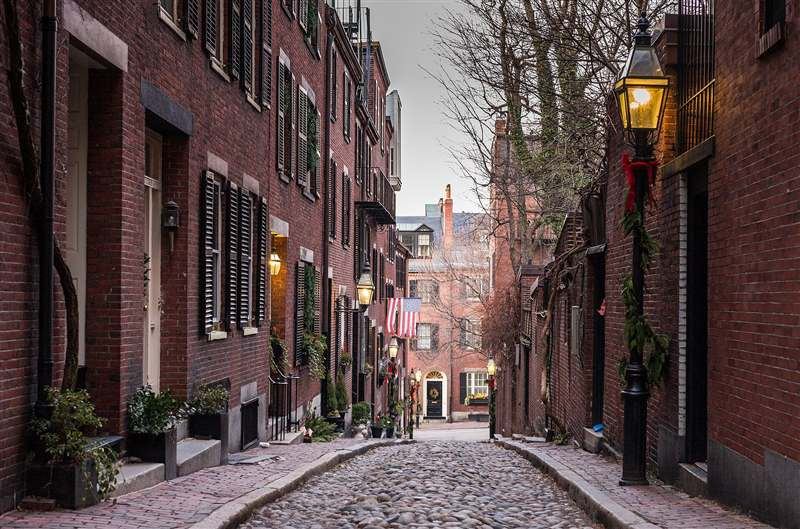
Gas lamps, brick rowhouses, and Acorn Street — Boston’s most photographed lane — make Beacon Hill the city’s best aimless walk.
No ticket, no route, no wrong turn: Beacon Hill is the rare landmark you experience just by walking through it. The gas lamps burn gas, the brick sidewalks date to another century, and behind every shutter and window box someone lives: remember that when you raise your camera.
Chestnut, Mt. Vernon and Pinckney rise and fall past fanlight doorways, and Louisburg Square, a private green ringed by bowfront townhouses, is the hill at its most cinematic. Acorn Street’s single cobblestone block is the famous photo: come early, keep your voice down and stay off the steps. Then browse the antique shops of Charles Street, or follow the Black Heritage Trail across the north slope, home to a thriving free Black community in the early 19th century.
Cost Free; Museum of African American History $15 · Time An hour or two · Hours Any time; the museum Thu–Sun 10 a.m.–4 p.m. · Hours and prices
- Come in any season: snow on the gas lamps may be the hill’s best look.
- Brick and cobblestone turn slick in the rain, and the hill is steep. Flat shoes win.
Main entries Beacon Hill · Acorn Street · Charles Street · Museum of African American History · The Black Heritage Trail
Climb the Bunker Hill Monument
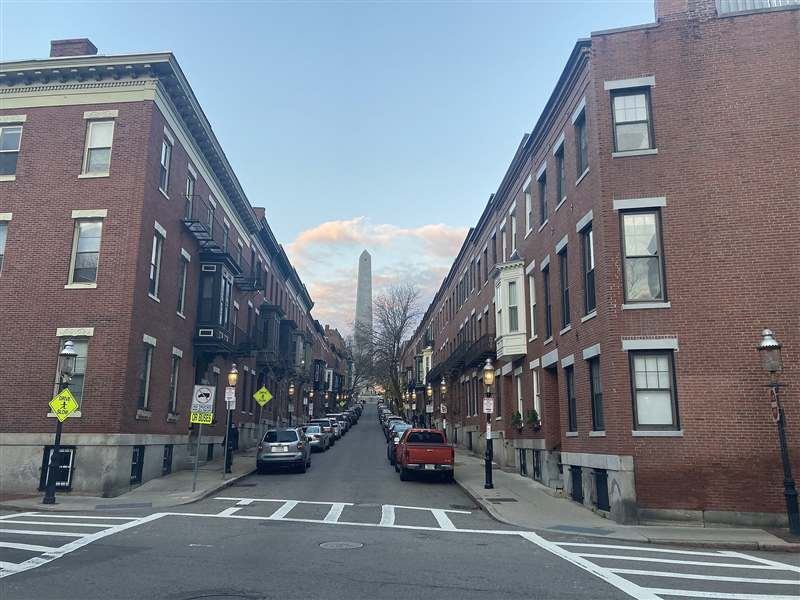
A 221-foot granite obelisk, 294 spiral steps, and a view from the top that explains why anyone fought this hard for one hill — all free.
The obelisk over Charlestown marks June 17, 1775, a battle fought, in true Boston fashion, mostly on Breed’s Hill. The British took the ground and paid so dearly for it that the Revolution stopped looking like a skirmish. The granite column can be climbed, with no elevator and the harbor waiting at the top.
The narrow spiral is a workout, cool in the stone even in July, and the small windows at the top frame the Zakim Bridge, the downtown skyline and the harbor opening out beyond the Navy Yard. The Bunker Hill Museum, facing Monument Square, sorts out the troop movements. The monument is the Freedom Trail’s last stop; pair it with the USS Constitution, 10 minutes downhill.
Cost Free · Time An hour, museum included · Hours Wed–Sun 10 a.m.–5 p.m. (1–4 p.m. mid-Oct to late May) · Hours and prices
- Heat, weather and staffing can close the stairs even on an open day, and the National Park Service posts the day’s status; only 25 climbers may be inside at once, and the last climb starts 30 minutes before closing.
- It is just as many steps back down: wear sensible shoes, keep a steady pace and pause when you need to. Everyone does.
Main entries Bunker Hill Monument · USS Constitution · Charlestown
Ride the Swan Boats
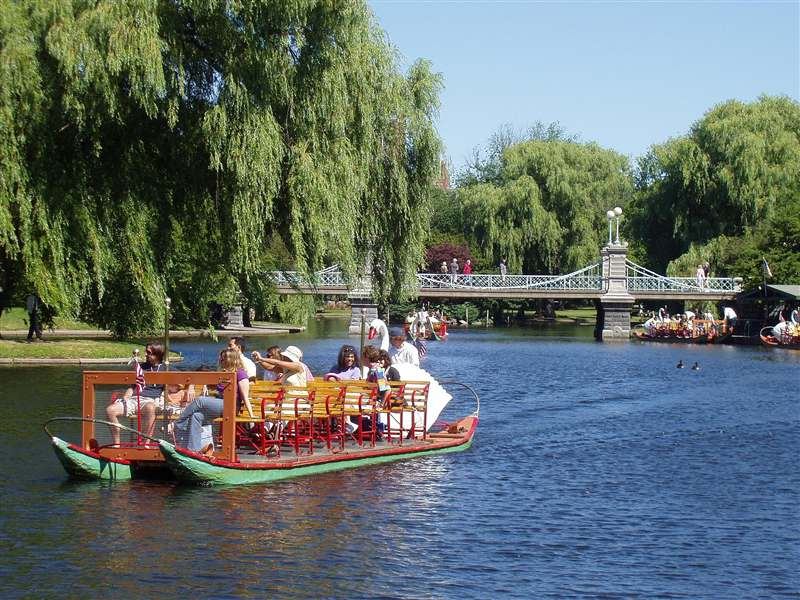
A pedal-powered swan has been circling the Public Garden lagoon since 1877 — 15 unhurried minutes of the prettiest people-watching in Boston.
Few things in Boston have changed as little as this one. The Swan Boats are still run by the family that launched them, still pedal-powered, and still gliding the same slow loop under the little footbridge, which is exactly the point.
A driver pedals behind the swan while you sit on wooden benches for a quiet loop of 10 to 15 minutes, with no narration at all. From the water you get angles the paths never give you: the footbridge overhead, the flower beds in full spill, Back Bay brownstones rising past the trees. Afterward, the Make Way for Ducklings statues near the Charles Street gate are a 2-minute walk, and Boston Common is just across the street.
Cost $4.75 adults · Time 10–15 minutes on the water · Hours Mid-April to Labor Day, daily 10 a.m.–4 p.m. (to 5 p.m. in summer) · Hours and prices
- The boats stay at the dock in rain, high wind and extreme heat. Weekday mornings are calmest.
- Tickets are sold only at the dock; summer-weekend lines move fast.
Main entries Swan Boats · Boston Public Garden
Stroll Newbury Street & Back Bay
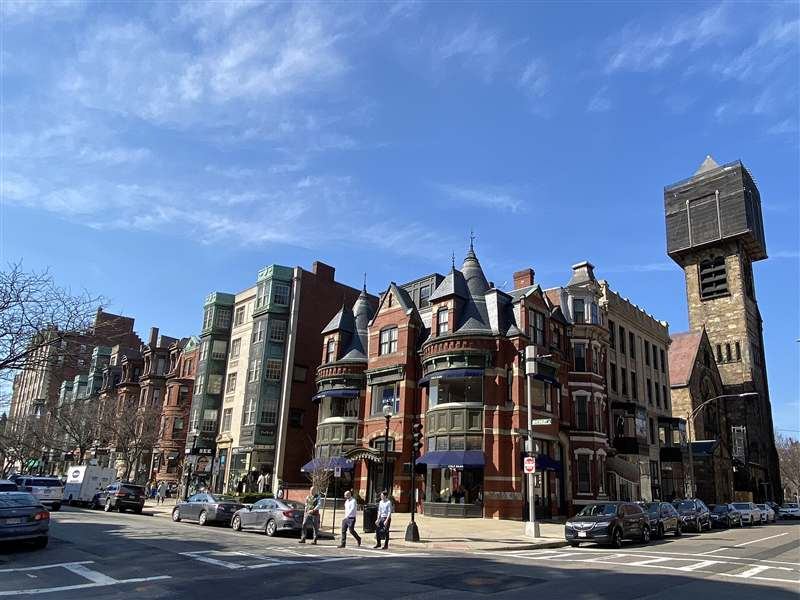
Eight blocks of brownstone storefronts run from the Public Garden to Massachusetts Avenue, ending near the best architectural staring contest in America — Trinity Church versus the Library.
Back Bay is what Boston looks like when it plans ahead: a filled-in tidal marsh laid out on a grid. Newbury Street is the showpiece, eight blocks of brownstones whose parlor floors have been selling things beautifully for more than a century.
Walk Newbury west from Arlington Street, where designer flagships and galleries give way to independent boutiques, vintage racks and café tables near Massachusetts Avenue. One block south, H. H. Richardson’s Trinity Church faces the Boston Public Library across Copley Square in a permanent, magnificent standoff, and the Boston Marathon finish line waits on Boylston Street all year. Cool down on the Commonwealth Avenue Mall, one block north, the closest thing Boston has to a Parisian boulevard.
Cost Free; Trinity Church $10 · Time Half a day · Hours Any time; Trinity Church Tue–Sat 10 a.m.–4:30 p.m. (Wed–Sat Jan–Mar) · Hours and prices
- Cross streets run A to H, Arlington to Hereford, so you always know where you are.
- On a snow day, the skybridge between the Prudential Center and Copley Place keeps you indoors.
- Children under 14 see Trinity Church free; on Tuesdays visits pause from noon to 12:45 p.m. for the Eucharist.
Main entries Newbury Street · Trinity Church · Commonwealth Avenue Mall
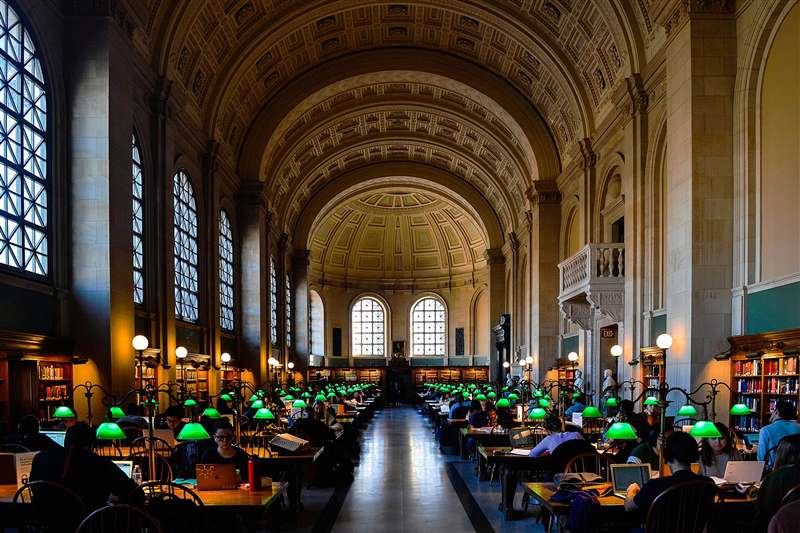
Tour the Boston Public Library
It says “Free to All” over the door, and the grandest building in Boston has meant it since 1895 — Bates Hall alone is worth the trip.
Charles Follen McKim’s palace for the people still behaves like one: marble lions on the staircase, Sargent murals in the corridors, a courtyard out of an Italian cloister, all open to anyone who walks in.
Self-guide in this order: the staircase; Edwin Austin Abbey’s Holy Grail cycle and John Singer Sargent’s vaulted gallery upstairs; Bates Hall, the barrel-vaulted reading room of long oak tables and green-shaded lamps, softer in person because it is full of people working; then the arcaded courtyard, the quietest outdoor room in Back Bay. The connected Boylston Street wing is the working modern library, lighter, louder and full of kids.
Cost Free, tours included · Time An hour; two with a tour · Hours Mon–Thu 9 a.m.–8 p.m., Fri–Sat 9 a.m.–5 p.m., Sun 11 a.m.–5 p.m. · Hours and prices
- The free art-and-architecture tours are given several times most weeks, usually at 10 a.m. or 5:30 p.m.; register at bpl.org, up to a month ahead.
- Bates Hall is a working reading room: keep voices low and cameras discreet.
- Trinity Church waits directly across the plaza.
Main entries Boston Public Library · Trinity Church
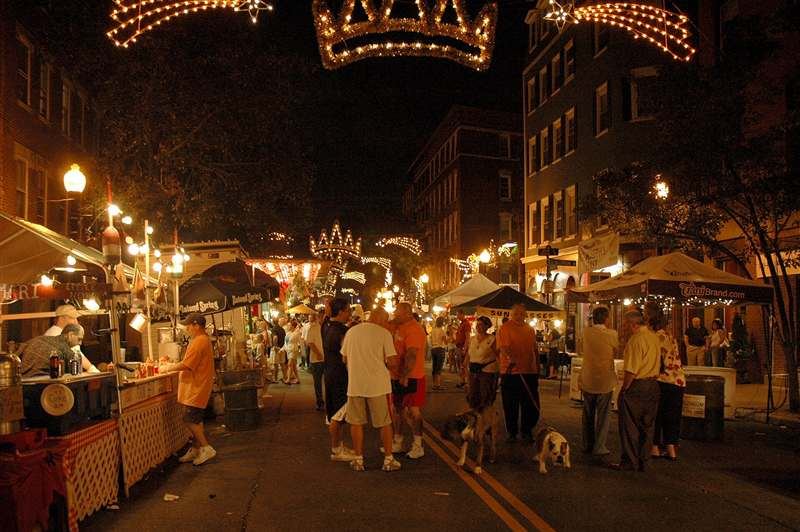
Eat Your Way Through the North End
One of Boston’s oldest neighborhoods fits Paul Revere’s house, Old North Church, and the city’s best cannoli argument into a few narrow, delicious blocks.
The layers show on every block: Paul Revere’s little wooden house sits a block off the red-sauce restaurants of Hanover Street, church bells ring over espresso counters, and in summer the feast processions take over streets the colonists laid out. Come for the history; stay until you have eaten too much.
Hanover is the parade route; Salem, one block over, runs narrower and more local, and the 17th-century lanes between them bend and dead-end. See the Paul Revere House, built around 1680, and Old North Church, where the two lanterns were hung on April 18, 1775. For dessert, Hanover Street’s two famous pastry counters stand a short block apart: Modern fills its cannoli to order, and that is the one to eat; Mike’s white box tied with string is the one to carry home to visitors.
Cost Free to wander; Paul Revere House $6; Old North Church $10 · Time Half a day; an evening with dinner · Hours Paul Revere House daily 10 a.m.–5:15 p.m. (to 4:15 p.m. in winter); Old North Tue–Sat 10 a.m.–5 p.m., Sun 12:30–5 p.m. · Hours and prices
- Reserve for weekend dinners, because tables are small and demand is not; or eat early and stroll after.
- Italian feast processions fill weekend streets in summer, peaking in August: loud, crowded and worth planning around.
Main entries North End · Paul Revere House · Old North Church · Hanover Street
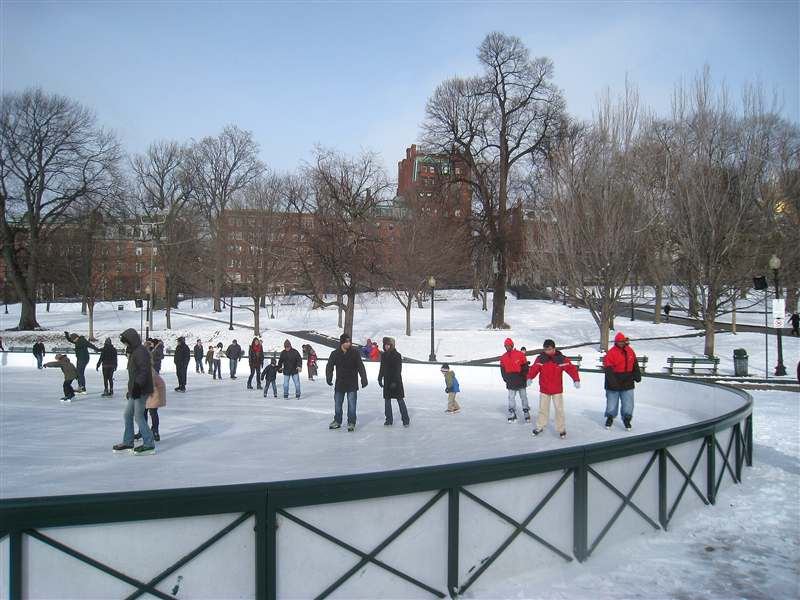
Skate on Frog Pond
Every winter America’s oldest public park grows a skating rink in the middle of downtown — rentals at the pond’s edge, lights strung over the ice.
Frog Pond is small, and that is its charm: one unhurried oval where wobbling first-timers, rail-clingers and show-off teenagers share the ice, with the gold dome of the State House floating above the bare trees.
Evening sessions are the storybook version, with music over the ice, breath in the air and lights strung through the branches. December is the peak, when the Common’s holiday tree and lights make the park around the rink part of the outing. An hour on the ice, a warm drink, a walk across the Common while your ears are still cold: that is the whole plan.
Cost Adults $12 (the 2025–26 rate); under 58 inches free; skates $18, children’s $12 · Time An hour on the ice · Hours About late November to early March, weather permitting
- In the 2025–26 season the rink opened at 10 a.m. daily and closed at 9 p.m. (10 p.m. Fridays and Saturdays, 3:45 p.m. Mondays); mild spells and storms can close the ice.
- Skates rent rinkside, lockers are $7, and watching from the fence costs nothing.
Main entries Boston Common
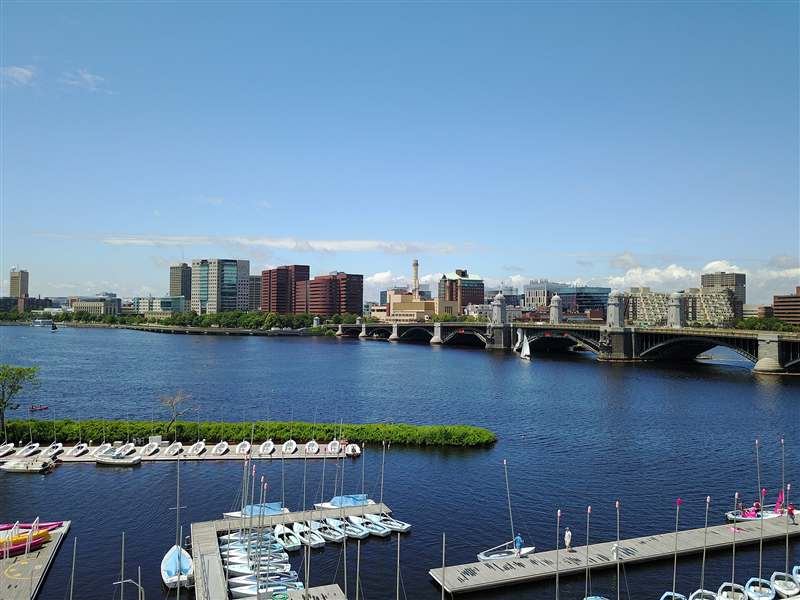
Spend Time Along the Charles
The Charles River Esplanade is Boston’s riverside front porch — paths, docks, and lawns where the city runs, sails, and watches the sun drop behind Back Bay.
Boston and Cambridge face each other across the Charles, and the Boston bank belongs to the Esplanade, a ribbon of green between Back Bay and the river. Locals use it all day: runners at dawn, rowing shells at midday, picnics and sunsets in the evening.
Cross a footbridge over Storrow Drive and the traffic noise falls away. In the warmer months, community boathouses send small sailboats tacking across the basin while kayaks and paddleboards launch from the banks; from water level, the Back Bay skyline lines up as one long postcard. The reliable showstopper is sunset: find a dock near the Hatch Shell, face west and watch the light go amber over the water.
Cost Free; most Hatch Shell concerts free; boat rentals extra · Time An hour, or the whole evening · Hours Dawn to dusk
- Community Boating, at 21 David G. Mugar Way below the Longfellow Bridge, rents sailboats and kayaks to visitors from spring into fall.
- The Head of the Charles, the world’s largest three-day rowing event, packs both banks over a weekend in mid-October.
Main entries Charles River Esplanade · Memorial Drive
Ferry to the Harbor Islands
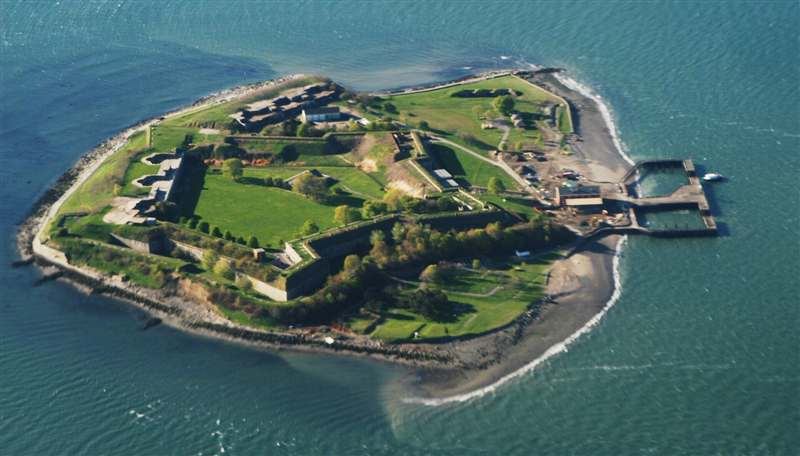
More than 30 islands sit within sight of downtown — a national and state park where a short ferry ride buys you forts, beaches, and blessed quiet.
Boston keeps an entire archipelago at the end of a short ferry ride. The Harbor Islands, more than 30 of them and managed as a national and state park, are reached by ferry from Long Wharf, and stepping off the boat feels like leaving the city entirely.
Georges Island is the classic first trip: the ferry lands at the foot of Fort Warren, a massive granite fort of the Civil War era whose dark tunnels and grassy ramparts you can roam more or less freely. Spectacle Island is the harbor’s great comeback story, a former landfill rebuilt into green hills with a swimmable beach and a short climb to a full-width view of the skyline. Peddocks, reached by ferry from Hingham, is quieter and more rustic, with camping in season.
Cost Islands free; ferry $24.95 round trip, $17.95 ages 3–11 · Time Half a day for one island, a full day for two · Hours Ferries mid-May to mid-October · Hours and prices
- Spectacle Island boats run daily in summer and on weekends into October; Georges Island boats run daily from mid-June to Labor Day and Thursday–Sunday before that, and not at all after Labor Day. Seniors, students and military pay $22.95, and under-3s ride free.
- Pack water, food and sunscreen: services are thin, and on the smaller islands nonexistent.
- Confirm the last ferry the moment you land. That boat is not a suggestion.
Main entries Boston Harbor Islands · Long Wharf · Georges Island · Spectacle Island · Peddocks Island
Walk the Seaport
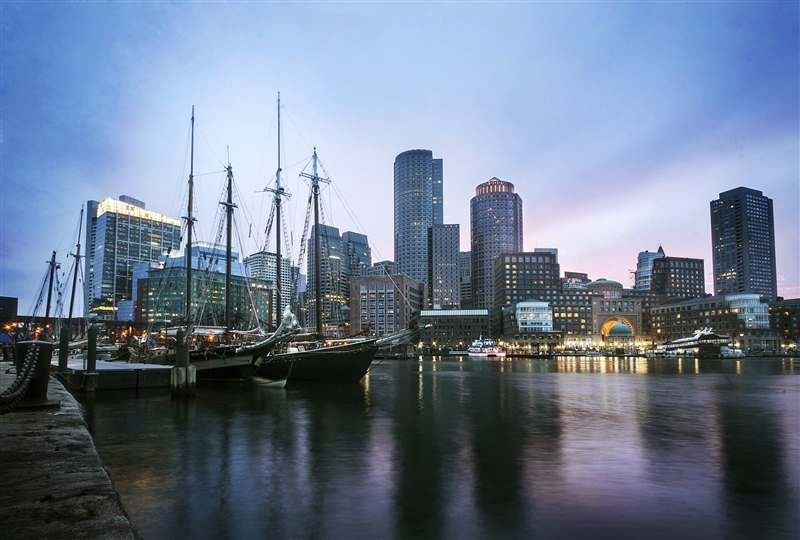
Boston’s newest district rose on filled land and old piers — glass towers, a harborside museum, and a waterfront walk the whole city shows up for.
For most of the 20th century this stretch of the South Boston waterfront was parking lots and warehouses. In a generation it became the Seaport: glass towers, plazas, restaurants and a museum cantilevered over the harbor. The water is never out of view, and the contrast with brick-and-cobblestone Boston is half the fun.
Start at Fort Point Channel, where the Boston Tea Party Ships ride at anchor below the bridges, then follow the Harborwalk past piers, lawns and benches. The Institute of Contemporary Art, a glass box jutting out over the water, is the cultural stop; the views earn the trip before the galleries do. Come for a late-afternoon walk, stay for seafood and a rooftop bar, and let the district do what it does best: glow.
Cost Free; the ICA $20, free Thu 5–9 p.m., 18 and under free · Time Two hours; an evening with dinner · Hours ICA Tue–Wed and Sat–Sun 10 a.m.–5 p.m., Thu–Fri to 9 p.m.; closed Mon · Hours and prices
- The ICA’s free Thursday nights run on timed tickets, so book ahead; on the first Friday of the month it closes at 5 p.m.
- The harbor wind bites in every season. A winter Harborwalk is beautiful and bracing.
Main entries Seaport District · The Harborwalk · Institute of Contemporary Art · Fort Point
Take a Boston Duck Tour
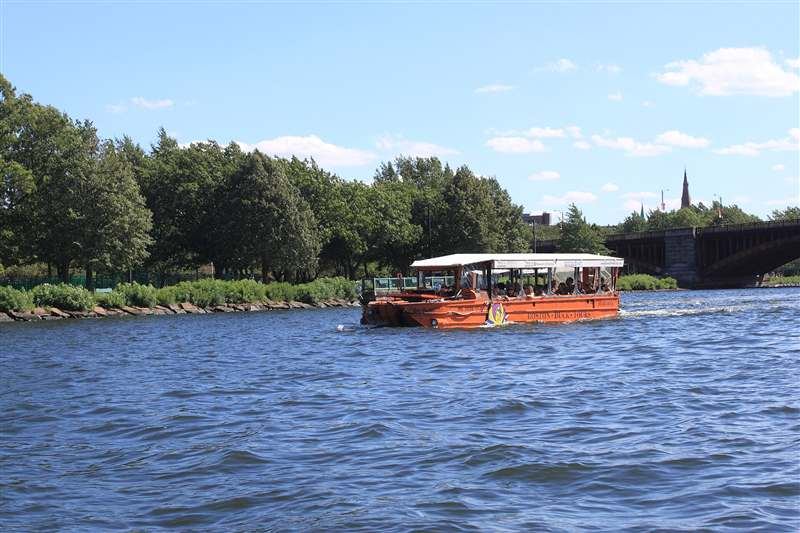
A WWII-style amphibious truck rolls past the landmarks, then drives straight into the Charles — unabashedly touristy, and still the best orientation lap in Boston.
For a first day, nothing orients you faster: a loop past the landmarks with a driver in costume narrating, before the truck noses down a ramp and splashes into the Charles River basin for a skyline view you cannot get on foot.
The vehicles are amphibious trucks in the style of the World War II landing craft that inspired them, and the drivers mix history with committed wisecracks past the State House dome, the Public Garden and Back Bay’s brownstones. The moment the hull settles into the river is worth the ticket by itself, and kids are sometimes invited to take the wheel. These are the same boats that carry Boston’s championship parades. Quack when instructed.
Cost $57 adults, plus fees · Time About 80 minutes · Hours Late March to November
- Each tour spends about an hour on land and 20 minutes afloat. Summer weekends and holidays sell out, so book ahead; midweek mornings are the easier get.
- Children 3–11 pay $42; on top come a 5 percent Convention Center fee and $2 a ticket online. Tours leave from the Prudential Center, the Museum of Science and the New England Aquarium; your ticket names which.
Main entries Touring Boston · Prudential Center · Museum of Science · New England Aquarium
Taste Boston’s Seafood
Chowder made with cream and never tomato, lobster rolls hot or cold, oysters by the dozen: the verdicts, named.
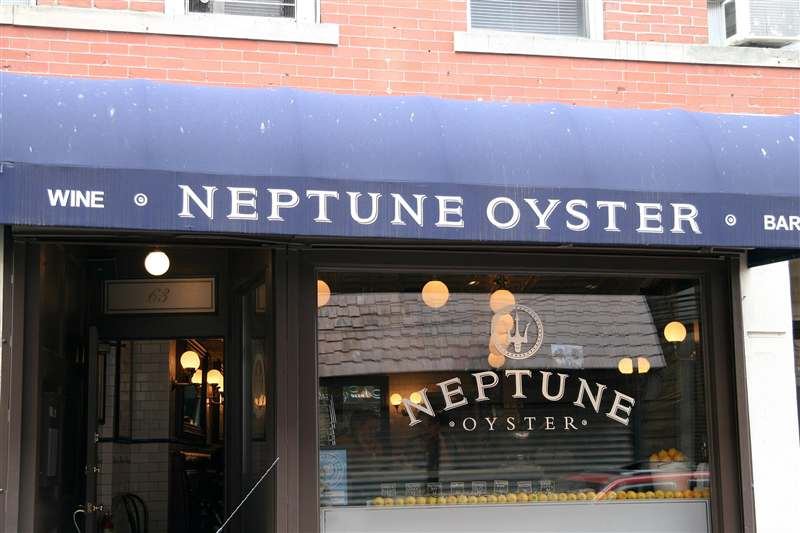
Boston has been pulling dinner out of the Atlantic for four centuries, and the arguments have settled into verdicts. Lobster roll: Neptune Oyster on Salem Street, hot with butter in a toasted split-top roll (Neptune Oyster; Saltie Girl in Back Bay is the runner-up). Clam chowder: Legal Sea Foods on Long Wharf, cream and never tomato, the recipe shipped, by the company’s account, to every presidential inauguration since Reagan’s in 1981 (Legal Sea Foods).
Oysters: Row 34 in the Seaport, or Neptune again, a mixed dozen from Duxbury, Wellfleet and Maine that tastes its way up the coast. Dim sum: Hei La Moon in Chinatown, carts and all (Hei La Moon). Union Oyster House, serving since 1826, is the history lesson: sit at the semicircular raw bar for the oysters and the room, and eat your chowder on Long Wharf.
Cost Market price; chowder by the cup is the cheap way in · Time A meal · Hours Lunch and dinner daily
- Ask the shucker what came in freshest; oyster lists turn over daily.
- Fried clams, whole-belly and crisp, are a North Shore invention; the best are a day trip away in Essex and Ipswich.
Main entries Where to Eat · Eat & Drink Like a Bostonian · North End
Catch a Game at Fenway Park
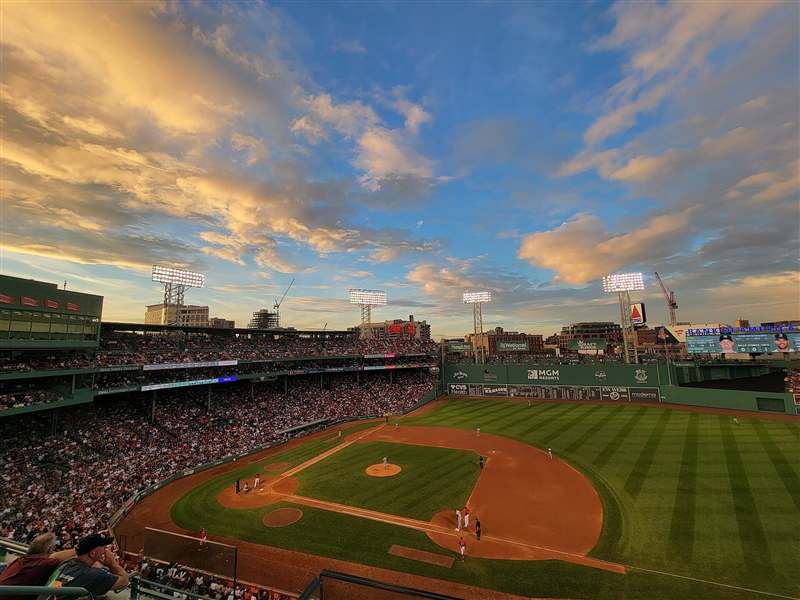
The oldest ballpark in the major leagues has been packing them in since 1912 — and the Green Monster still turns routine fly balls into drama.
Fenway Park is the closest thing Boston has to a shared living room. Opened in 1912, it is wedged so tightly into its street grid that every quirk fans love was forced on it, and from April into fall the whole neighborhood tilts toward it on game nights.
Look for the 37-foot Green Monster and the hand-run scoreboard at its base, and Pesky’s Pole down the right-field line. Outside, sausage carts smoke along Lansdowne Street; inside, the ritual runs like clockwork: the first glimpse of green from the concourse, a Fenway Frank, the eighth-inning “Sweet Caroline,” which the whole grandstand sees coming and joins anyway. Even standing room counts.
Cost Game tickets vary by date; tours $30 adults · Time Three hours for a game; an hour for the tour · Hours Tours 9 a.m.–5 p.m. Apr–Oct, 10 a.m.–5 p.m. Nov–Mar; on game days the last tour leaves 3 hours before first pitch · Hours and prices
- Weekend and summer games sell out well ahead. Book early, or take standing room or the bleachers.
- Ballpark tours run daily, year-round, on the hour ($21 ages 3–12), and include the Green Monster seats: the best offseason or rainy-day version.
Main entries Fenway Park · Fenway Park chapter · Lansdowne Street · Fenway–Kenmore
Explore Boston’s Museums
From a half-million works at the MFA to empty frames in a Venetian palazzo, Boston’s museums could fill a week — here’s where to start.
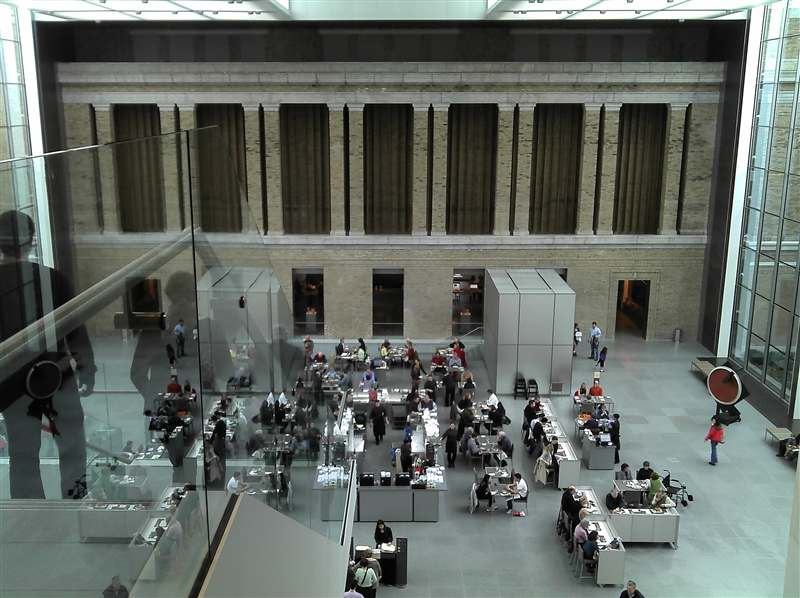
Boston collects the way other cities build skylines: an encyclopedic art museum with nearly half a million works, a palazzo frozen in time, a science museum standing on a dam across the Charles, a four-story ocean tank downtown and contemporary art cantilevered over the harbor, all a T ride apart.
The Museum of Fine Arts rewards several short visits better than one marathon. A short walk away, the Isabella Stewart Gardner Museum is its opposite: one collector’s palazzo, kept as she left it, with the empty frames from the 1990 heist still hanging. Group by geography: the MFA and the Gardner make a natural day, the ICA anchors a Seaport evening, and the New England Aquarium’s Giant Ocean Tank sits steps from the harbor ferries.
Cost MFA $30; Gardner $25; ICA $20; Museum of Science $33; Aquarium $39.95 · Time Half a day each · Hours Most open 10 a.m.–5 p.m.; the MFA to 10 p.m. Thu–Fri, the Gardner to 9 p.m. Thu, the ICA to 9 p.m. Thu–Fri · Hours and prices
- Thursday nights, 5–9 p.m., are free at the Gardner and the ICA, and the MFA is pay-what-you-wish after 5 p.m. on the third Thursday of the month. The MFA and the Gardner close Tuesdays, the ICA Mondays.
- Visitors 17 and under enter the Gardner free, and 18 and under the ICA; anyone named Isabella enters the Gardner free for life.
Main entries Museum of Fine Arts · Isabella Stewart Gardner Museum · Museum of Science · New England Aquarium
Walk the Emerald Necklace
Frederick Law Olmsted threaded 1,100 acres of parkland into one continuous green chain across Boston — and every acre of it is free.
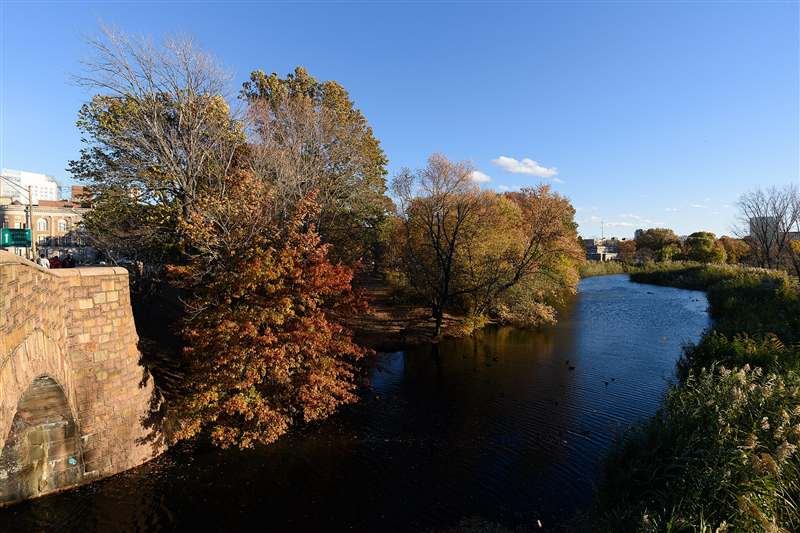
Boston’s big parks look like separate destinations on a map: the Fens by the ballpark, Jamaica Pond, the Arboretum out past Jamaica Plain, Franklin Park. They are one design, the Emerald Necklace, a chain of green that Frederick Law Olmsted laid out from the late 1870s; the older Common and Public Garden, linked to it by the Commonwealth Avenue Mall, complete the walk into downtown.
Everyone finds the Common. Fewer make it to the Fens, where World War II victory gardens are still tended plot by plot and the Kelleher Rose Garden blooms a foul ball from Fenway Park. Farther out, Jamaica Pond’s level loop is made for unhurried laps, and the Arnold Arboretum, run by Harvard and open to all, is a living museum of trees with hills and long views. Franklin Park, the far end, is the chain’s biggest landscape.
Cost Free · Time A full day on foot, or three half-day sections · Hours City parks 6 a.m.–11:30 p.m.; the Arboretum sunrise to sunset, its visitor center daily 10 a.m.–4 p.m. · Hours and prices
- About 1,100 acres and 7 miles. Fall color and the Arboretum’s spring bloom are the showpieces.
- Best half-day: Jamaica Pond plus the Arboretum, with Jamaica Plain’s cafés a short walk away.
Main entries The Emerald Necklace · Jamaica Pond · Arnold Arboretum · Franklin Park
Settle Into an Irish Pub
Boston’s Irish roots run deeper than any American city’s — and the proof is poured nightly in pubs that have been family-run for generations.
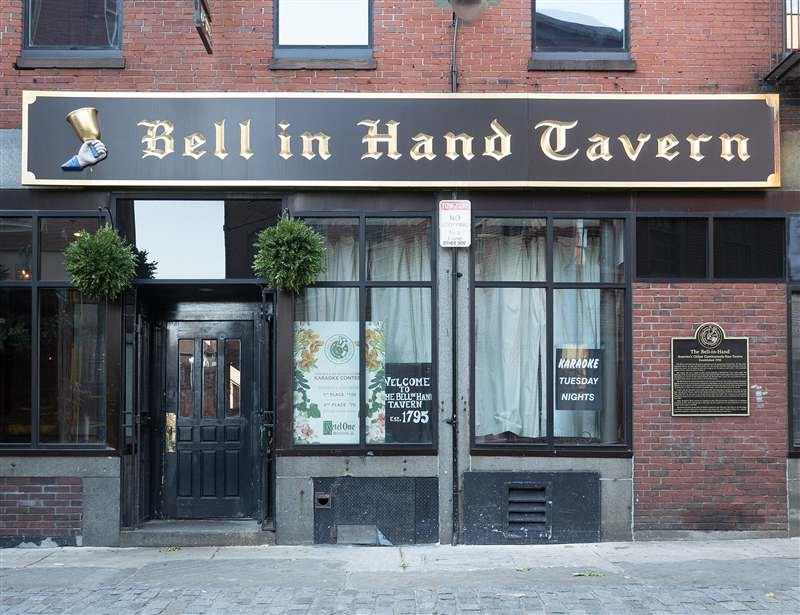
Irish immigration remade Boston in the 19th century, its neighborhoods, its politics, its accent, and the easiest way into that story is a pub. Not a themed one: a working one, where the pint is poured properly and, on session nights, musicians gather around a table rather than on a stage, fiddles, flutes and a bodhrán trading tunes with barely a word of introduction.
J.J. Foley’s, at 117 East Berkeley Street in the South End, has been run by the Foley family since 1909. The Eire Pub, at 795 Adams Street in Dorchester, has poured for every campaigning politician since Ronald Reagan stopped in in 1983. The Druid, in Cambridge’s Inman Square, holds sessions on Wednesday nights and weekend afternoons; the Brendan Behan in Jamaica Plain is small, cash-only and loud; the L Street Tavern in South Boston is the Good Will Hunting corner bar, still a neighborhood room under new owners since 2024. The Black Rose, steps from Faneuil Hall, is the tourist’s one, and fine for it.
Cost The price of a pint · Time An evening · Hours Hours vary by pub; last call no later than 2 a.m.
- The South Boston St. Patrick’s Day parade steps off at 11:30 a.m. on the Sunday nearest March 17 (March 14, 2027) and runs along Broadway; pubs fill by noon, so claim a stool early or stand on the route.
- Pub kitchens close well before last call, so eat first.
- The Irish Famine Memorial at Washington and School streets, steps off the Freedom Trail, marks the catastrophe that sent so many families here.
Main entries Bars & Nightlife · The Irish Heritage Trail · South Boston