
See the Founding-Era Sites
Beyond the trail’s greatest hits: the balcony where Boston first heard the Declaration, the pews where the Tea Party boiled over, downtown’s oldest house.
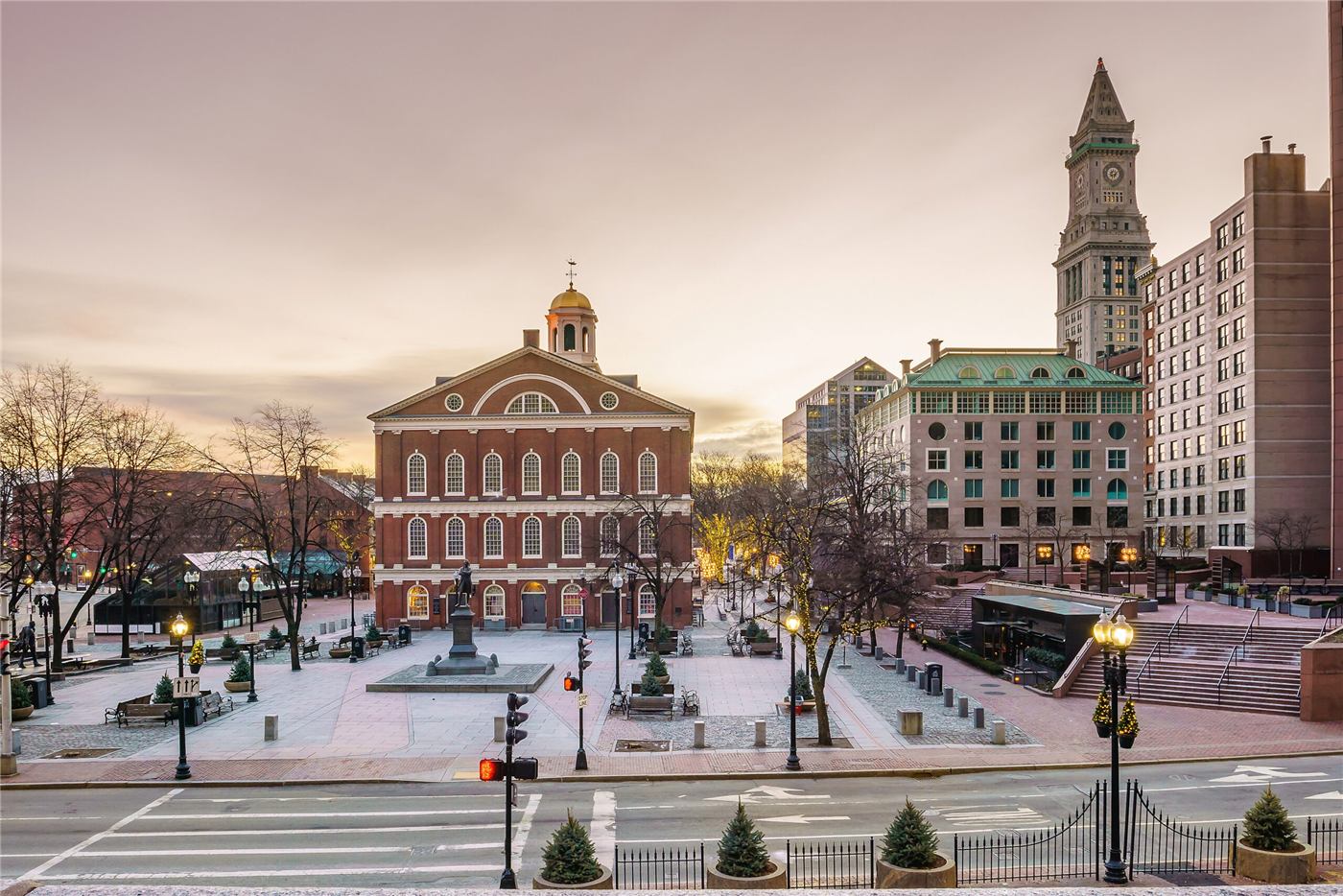
Everyone photographs Faneuil Hall and moves on. The better day is the deep cut: a cluster of founding-era rooms, graves, and doorsteps packed into a few downtown blocks, where the Revolution stops being a mural and turns back into places where real people argued, mourned, and lost their tempers.
Start at the Old State House
Built in 1713, the Old State House is downtown’s great survivor — a small brick seat of colonial government now boxed in by towers. The Declaration of Independence got its first Boston reading from its balcony, and a ring of cobblestones just outside marks where the Boston Massacre unfolded in 1770: five colonists killed, and a revolution handed its rallying cry. A few blocks away, the Old South Meeting House is where the meetings that led to the Boston Tea Party boiled over, thousands packing the pews before the march to the harbor.
Graves, chapels, and the oldest house downtown
The Granary Burying Ground holds Samuel Adams, John Hancock, and Paul Revere within a few paces of one another, their slate stones tilted by centuries of frost. Up the block, King’s Chapel pairs a stern granite exterior with a surprisingly graceful Georgian interior of box pews. Then walk the red line into the North End for the Paul Revere House — built around 1680, the oldest surviving house in downtown Boston, and small enough that standing in its kitchen collapses the distance between legend and household.
Finish with the tea
The Boston Tea Party Ships & Museum, on Fort Point Channel, is the theatrical finale: a ticketed, hands-on reenactment aboard replica ships where you are encouraged — expected, really — to heave a tea chest overboard. It is the one stop here built for kids as much as historians. The rest of the cluster is a mix: the burying grounds and the Massacre site are free to visit, while several interiors charge admission and keep seasonal schedules — check official pages before building your day around any single one, and browse Boston’s museums for what pairs well.
Know before you go
- Getting there: State station (Blue and Orange Lines) exits practically under the Old State House balcony. Check live T status first.
- Free and paid mix: the burying grounds and Massacre site cost nothing; the museum interiors are ticketed — check each official page before a special trip.
- It all fits in a day: every downtown stop here sits within a fifteen-minute walk; the Tea Party ships on Fort Point Channel are the only real detour.
Pair it with
The Explore Boston newsletter
Know the city like you live here
Every morning at 6:30, the Explore Boston daily covers the city’s news, events, and weekends — the classics and the brand-new alike. Free, seven mornings a week.
Join 7,500+ Bostonians · one short email a day · unsubscribe anytime