
Explore Faneuil Hall
The 1742 hall where revolution was argued into being now anchors Boston’s liveliest marketplace — grasshopper weathervane on top, street performers out front.
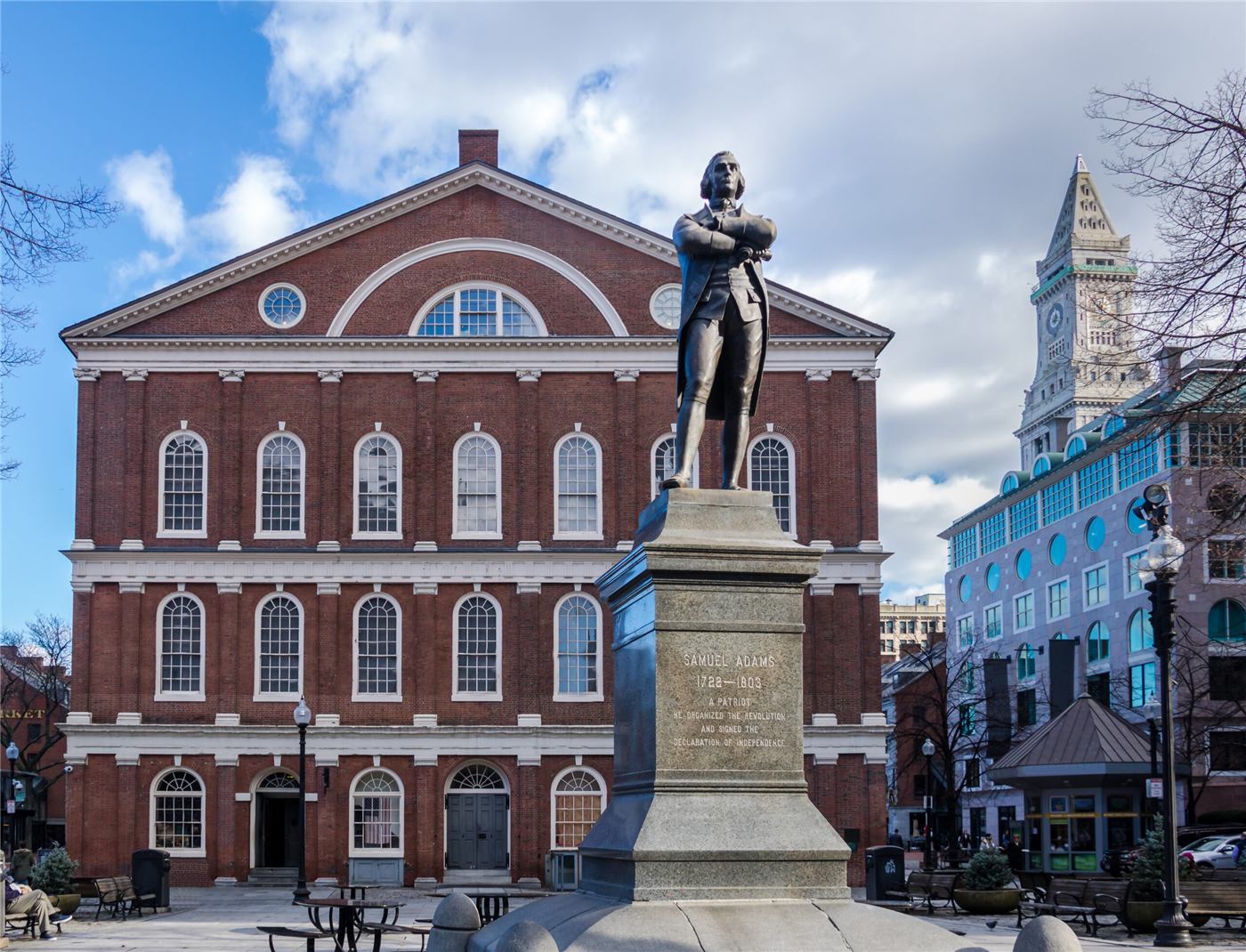
Yes, it’s touristy. It has also been the city’s public square since 1742, which buys a building some slack. Faneuil Hall earned the nickname “Cradle of Liberty” hosting the town meetings that talked Boston into revolution — and the marketplace out front has been feeding and entertaining crowds ever since.
The Cradle of Liberty
The Great Hall upstairs is where the nickname was earned. Town meetings here railed against the Stamp Act and the Townshend Acts, and the arguments that spilled out of this room helped tip Boston toward revolution; a century later, abolitionists worked the same stage. Downstairs was a public market from opening day — commerce below, politics above, stacked in one brick box. The hall is now part of Boston National Historical Park: rangers give free talks beneath the portraits, and the Great Hall still hosts civic events. Up top, note the gilded grasshopper weathervane, a Shem Drowne original that has swung over the cupola since 1742.
Quincy Market and the colonnade
Behind the hall stretches Quincy Market, the long granite market house added in 1826 when Boston’s food trade outgrew Faneuil Hall’s ground floor. Its central aisle is now a food colonnade — chowder, lobster rolls, cannoli, and forty other ways to ruin your dinner — flanked by the North and South Market buildings and their shops. Out on the cobblestones, street performers draw the circles of spectators that orators once did: same spot, lower stakes, better juggling.
Touristy, and it has earned it
Purists sniff at the marketplace, and fine: it is crowded, and the souvenirs are aggressively Boston. But this block has been about commerce and spectacle for nearly three centuries, so the crowds are not a betrayal of the history — they are the continuation of it. Say hello to the Samuel Adams statue on the hall’s plaza, then use the location: the Freedom Trail’s red line runs right past the door, the waterfront is a five-minute stroll, and the pastry counters of the North End are barely farther.
Know before you go
- Getting there: State station (Blue and Orange Lines) is around the corner and Haymarket is a few blocks north. Check live T status before you go.
- The hall is free: the Great Hall and its ranger talks cost nothing, though the room occasionally closes for events — a quick look at the official page saves a wasted climb.
- Go early: before late morning you can have the Great Hall nearly to yourself and walk the colonnade without the lunch crush.
- Oldest neighbor: Union Oyster House, serving since 1826, is a two-minute walk up the street — same era as Quincy Market, still shucking.
Pair it with
The Explore Boston newsletter
Know the city like you live here
Every morning at 6:30, the Explore Boston daily covers the city’s news, events, and weekends — the classics and the brand-new alike. Free, seven mornings a week.
Join 7,500+ Bostonians · one short email a day · unsubscribe anytime