
Stroll Newbury Street & Back Bay
Eight blocks of brownstone storefronts run from the Public Garden to Mass Ave, ending near the best architectural staring contest in America — Trinity Church versus the Library.
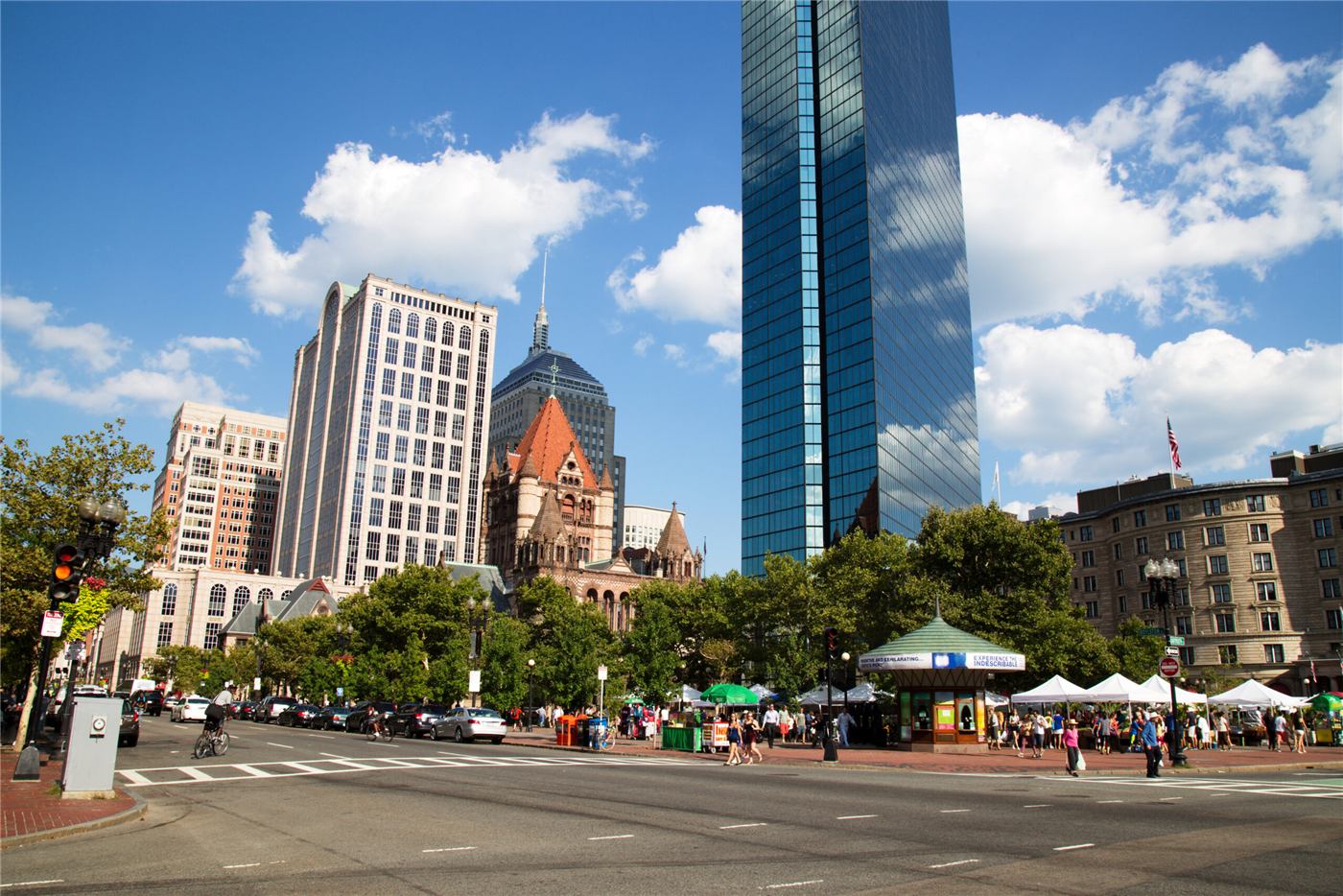
Back Bay is what Boston looks like when it plans ahead: a filled-in tidal marsh laid out on an actual grid, cross streets running alphabetically from Arlington to Hereford. Newbury Street is the showpiece — eight blocks of brownstones whose parlor floors have been selling things beautifully for more than a century, with Copley Square waiting at the far end.
Newbury, block by block
The street reads west like a gradient. At the Public Garden end, near Arlington, it is all designer flagships and galleries behind wrought iron and window boxes. Keep walking and the block numbers climb while the pretense drops: independent boutiques, vintage racks, bookstores, and café tables that fill the sidewalks in the warmer months. The upper floors stay stubbornly residential the whole way — look up and you are in the nineteenth century. By the time you reach Mass Ave you are in the scruffier, more interesting end of the street, which is exactly the direction to walk it.
Copley Square
One block south on Boylston, the neighborhood gathers itself into Copley Square, where H. H. Richardson’s Trinity Church — finished in 1877 and still the city’s architectural heavyweight — faces the Boston Public Library across the plaza in a permanent, magnificent standoff. The John Hancock Tower’s glass wall mirrors the church back at itself, which somehow flatters both. And painted across Boylston by the library is the Boston Marathon finish line, quietly there all year until Marathon Monday in April, when it becomes the center of the sporting universe.
The all-weather version
Commonwealth Avenue, one block north of Newbury, runs a tree-lined central mall through the whole neighborhood — the closest thing Boston has to a Parisian boulevard, and the prettiest cool-down lap after the shops. And when the weather turns genuinely hostile, do what locals do and cut indoors: the skybridge linking the Prudential Center and Copley Place lets you browse half of Back Bay on a snow day without buttoning your coat.
Know before you go
- Getting there: Copley station on the Green Line surfaces at the square itself; Arlington puts you at the Public Garden end of Newbury. Check live T status.
- The alphabet trick: cross streets run A to H — Arlington, Berkeley, Clarendon, Dartmouth, Exeter, Fairfield, Gloucester, Hereford — so you always know exactly where you are.
- Snow-day route: the indoor skybridge between the Prudential Center and Copley Place is the neighborhood’s all-weather shortcut.
- Free to wander: the stroll, the square, and the library cost nothing; Trinity Church usually asks a fee for a look inside, so admire the exterior freely.
Pair it with
The Explore Boston newsletter
Know the city like you live here
Every morning at 6:30, the Explore Boston daily covers the city’s news, events, and weekends — the classics and the brand-new alike. Free, seven mornings a week.
Join 7,500+ Bostonians · one short email a day · unsubscribe anytime