
Climb the Bunker Hill Monument
A 221-foot granite obelisk, 294 spiral steps, and a view from the top that explains why anyone fought this hard for one hill — all free.
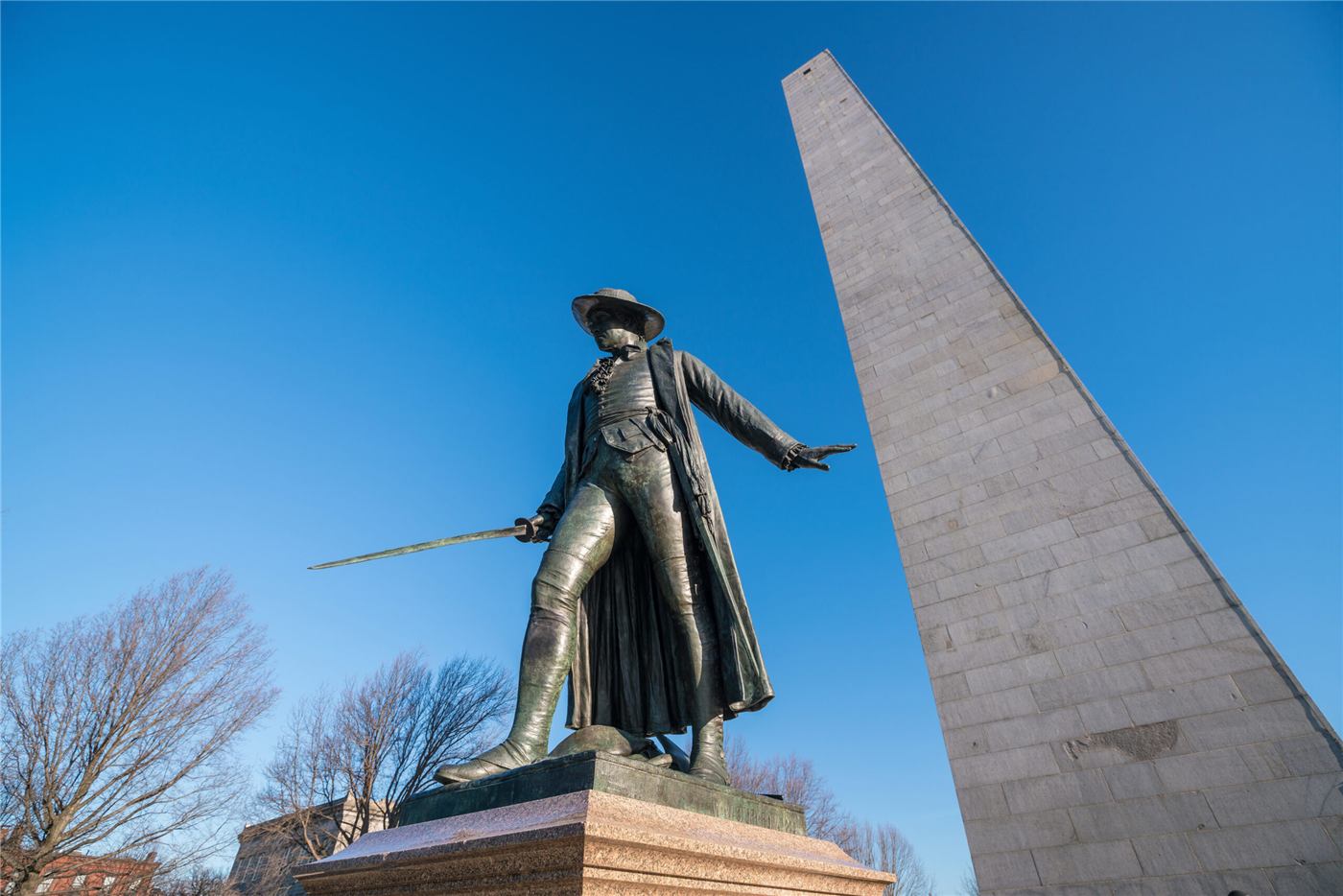
The obelisk over Charlestown marks June 17, 1775 — a battle fought, in true Boston fashion, mostly on Breed’s Hill. The British took the ground and paid so dearly for it that the Revolution stopped looking like a skirmish. The granite column raised in the decades that followed can be climbed — 294 steps, no elevator, the harbor waiting at the top.
The battle the hill remembers
On June 17, 1775, colonial militia dug in on the high ground above Charlestown overnight and waited while British regulars advanced up the slope in parade order. “Don’t fire until you see the whites of their eyes,” the order went — as the story goes, anyway — and short on powder, the defenders made every volley count, throwing back two assaults before yielding the hill on the third. The British held the field at a cost so staggering, especially among their officers, that both sides walked away convinced this would be a long, real war.
The Marquis de Lafayette laid the monument’s cornerstone on the battle’s fiftieth anniversary in 1825, and the obelisk rose over the following decades to its full 221 feet. Colonel William Prescott, who commanded the redoubt, stands in bronze out front, sword lowered, still telling everyone to hold their fire.
The 294 steps
There is no elevator and no landing worth the name — just a narrow granite spiral winding up the inside of the shaft to a small chamber at the top. It is a genuine workout, cool in the stone even in July, and the reward through the little windows is worth every step: the Zakim Bridge, the Charles, the downtown skyline, Charlestown’s rooftops, and the harbor opening out beyond the Navy Yard. Climbing access varies with season and staffing — the National Park Service posts current conditions, so check before making a special trip just for the stairs.
The Trail ends here
The monument is the northern terminus of the Freedom Trail, which makes it a natural finale: most visitors pair the climb with the USS Constitution at the Navy Yard, ten minutes downhill. Give Charlestown itself some time too — Monument Square’s brick rowhouses ring the obelisk like an honor guard, and the surrounding streets have a gaslit, Beacon-Hill-across-the-water feel. The Bunker Hill Museum, facing the square, sorts out the troop movements before or after you climb. All of it — monument, climb, museum — ranks among the best free afternoons in Boston.
Know before you go
- Getting there: Community College station on the Orange Line is the closest stop, a short uphill walk away — check live T status before you head out.
- Free, with an asterisk: grounds, museum, and climb cost nothing, but climbing hours shift with season and staffing — the National Park Service posts the day’s status.
- Dress for the stairs: 294 steps up and 294 back down, no elevator — real shoes, a steady pace, and it is fine to pause; everyone does.
- Breed’s Hill, actually: the battle was fought mostly on Breed’s Hill — correcting people on this point is a beloved local pastime.
Pair it with
The Explore Boston newsletter
Know the city like you live here
Every morning at 6:30, the Explore Boston daily covers the city’s news, events, and weekends — the classics and the brand-new alike. Free, seven mornings a week.
Join 7,500+ Bostonians · one short email a day · unsubscribe anytime