
Walk the Freedom Trail
Follow the red line in the brick 2.5 miles from Boston Common to Charlestown — sixteen revolutionary sites, ending on the deck of the USS Constitution.
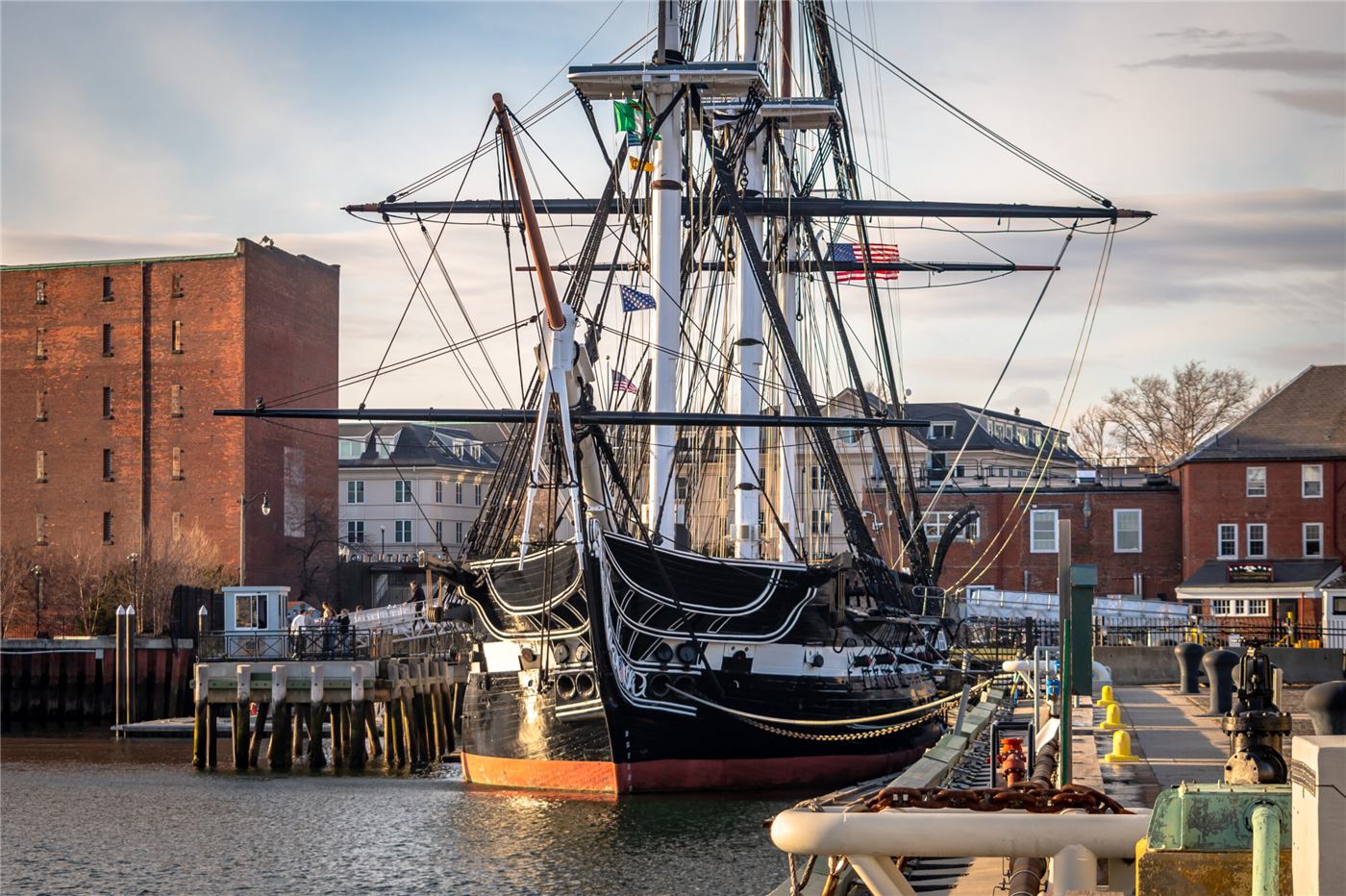
Boston’s best idea might be its simplest: paint a red line through the city and let it do the talking. The Freedom Trail links sixteen official sites — churches, burying grounds, meeting halls — along 2.5 miles of ordinary sidewalk, no bus and no ticket required, from Boston Common to a 1797 warship that is still in commission.
The red line does the navigating
Start on Boston Common, the country’s oldest public park, and follow the line of paint and brick at your feet. The downtown stretch is the dense one: the State House dome, Park Street Church, and the Granary Burying Ground — where Samuel Adams, John Hancock, and Paul Revere lie a few steps apart — all arrive within the first half mile. Resist the urge to check off every one of the sixteen stops; let the arc carry you past the Old State House and Faneuil Hall and into the North End, where the Paul Revere House and Old North Church sit among bakeries and the history starts to smell like espresso.
Charlestown is the payoff
Across the bridge, the trail trades tight streets for open sky. The Bunker Hill Monument rises over the ground of the ferocious 1775 battle, and the Charlestown Navy Yard, at the trail’s end, is where the USS Constitution rides at her berth. Launched in 1797 and nicknamed Old Ironsides after British cannonballs seemed to bounce off her live-oak hull, she is the oldest commissioned warship afloat anywhere — crewed to this day by active-duty Navy sailors. Boarding is free, though there is a security screening and open hours shift with the season, so check the official page before a special trip.
Do it in halves
You can walk the whole thing in a day, but the trail rewards pacing over conquest. The classic split: downtown sites in the morning, a long lunch in the North End, then Charlestown in the afternoon — or save Charlestown for a second day and give Bunker Hill’s 294 steps fresh legs. Either way, finish aboard the Constitution; after two and a half miles of plaques and headstones, standing on a wooden deck that fought the War of 1812 lands differently.
Know before you go
- Getting there: the trailhead is steps from Park Street station (Red and Green Lines), and the Charlestown end is an easy return via North Station or the ferry from the Navy Yard. Check live T status first.
- Free, start to finish: walking the trail costs nothing and boarding the USS Constitution is free too; a handful of interiors charge admission and are easy to skip or save.
- Wear real shoes: 2.5 miles of brick, cobblestone, and one proper hill — this is the most walking of anything on this list, and the best of it.
- Prefer the stories out loud: guided walks cover the downtown stretch with a costumed or ranger-led narrator — browse Boston tours to book one.
Pair it with
The Explore Boston newsletter
Know the city like you live here
Every morning at 6:30, the Explore Boston daily covers the city’s news, events, and weekends — the classics and the brand-new alike. Free, seven mornings a week.
Join 7,500+ Bostonians · one short email a day · unsubscribe anytime