
Wander Beacon Hill & Acorn Street
Gas lamps, brick rowhouses, and Acorn Street — one of the most photographed lanes in America — make Beacon Hill the city’s best aimless walk.
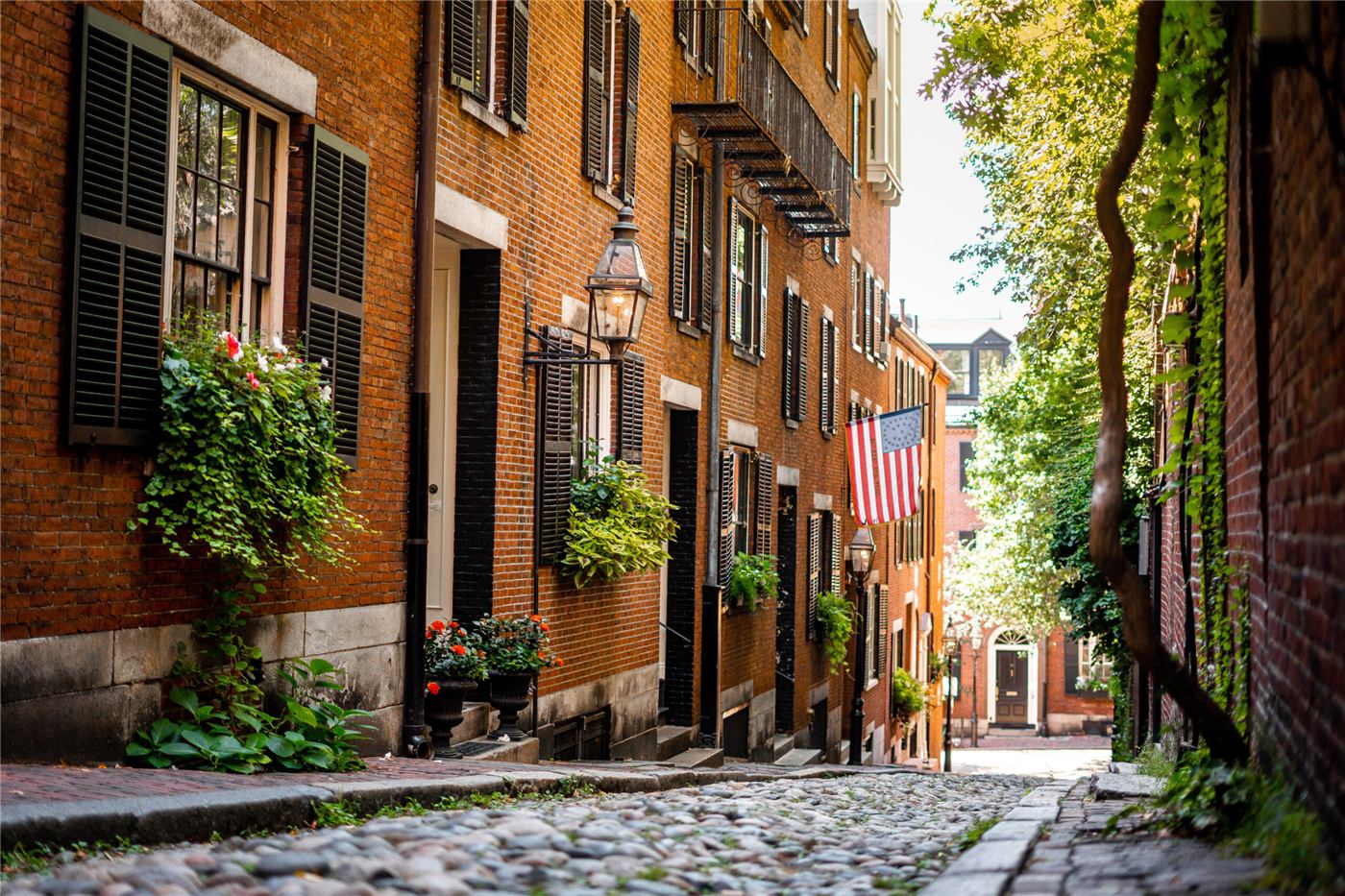
No ticket, no route, no wrong turn: Beacon Hill is the rare landmark you experience just by walking through it. The gas lamps really burn gas, the brick sidewalks really date to another century, and behind every shutter and window box, someone actually lives here — which is worth remembering when you raise your camera.
The lay of the hill
Start on Beacon Street, where brick townhouses face Boston Common across the traffic, then climb into the grid: Chestnut, Mount Vernon, and Pinckney rise and fall past fanlight doorways, black shutters, and sidewalks of old brick heaved by tree roots. The gas lamps are real, and they burn day and night. The State House dome gleams at the crest; Louisburg Square — a private green ringed by bowfront townhouses — is the hill at its most cinematic, which here is saying something.
Acorn Street, briefly and politely
One block long, steep, and paved with rough cobblestones, Acorn Street is routinely called one of the most photographed streets in America, and on a clear morning you will understand before your phone is out of your pocket. Two things to know: the light is best early, and every one of those doors is somebody’s actual front door. Take the photo, keep your voice down, skip the doorstep posing, and leave the lane as quiet as you found it — the neighbors share their street with remarkable patience.
Charles Street and the north slope
Charles Street, along the flat base of the hill, is the neighborhood’s main street and one of the city’s best browsing blocks — antique dealers, bookshops, florists, and cafés tucked into the ground floors of rowhouses, with window boxes doing their seasonal best overhead. And the beauty carries weight: the hill’s north slope was home to a thriving free Black community in the early nineteenth century, and its churches and meeting halls were engines of the abolitionist movement. The Black Heritage Trail links the key sites, and it turns a pretty walk into a serious one.
Know before you go
- Getting there: Charles/MGH station (Red Line) sits at the foot of the hill, and Park Street works from the Common side. Check live T status first.
- Completely free: the whole neighborhood is a no-ticket experience in any season — snow on the gas lamps may be its best look.
- Mind the residents: Acorn Street and Louisburg Square are private homes end to end; early mornings are calmer and kinder for photos.
- Watch your footing: brick and cobblestone turn slick in the rain, and the hill is genuinely steep — flat shoes win.
Pair it with
The Explore Boston newsletter
Know the city like you live here
Every morning at 6:30, the Explore Boston daily covers the city’s news, events, and weekends — the classics and the brand-new alike. Free, seven mornings a week.
Join 7,500+ Bostonians · one short email a day · unsubscribe anytime