
Tour the Massachusetts State House
Charles Bulfinch’s 1798 capitol crowns Beacon Hill with a gilded dome, a carved Sacred Cod, and free weekday tours of a working statehouse.
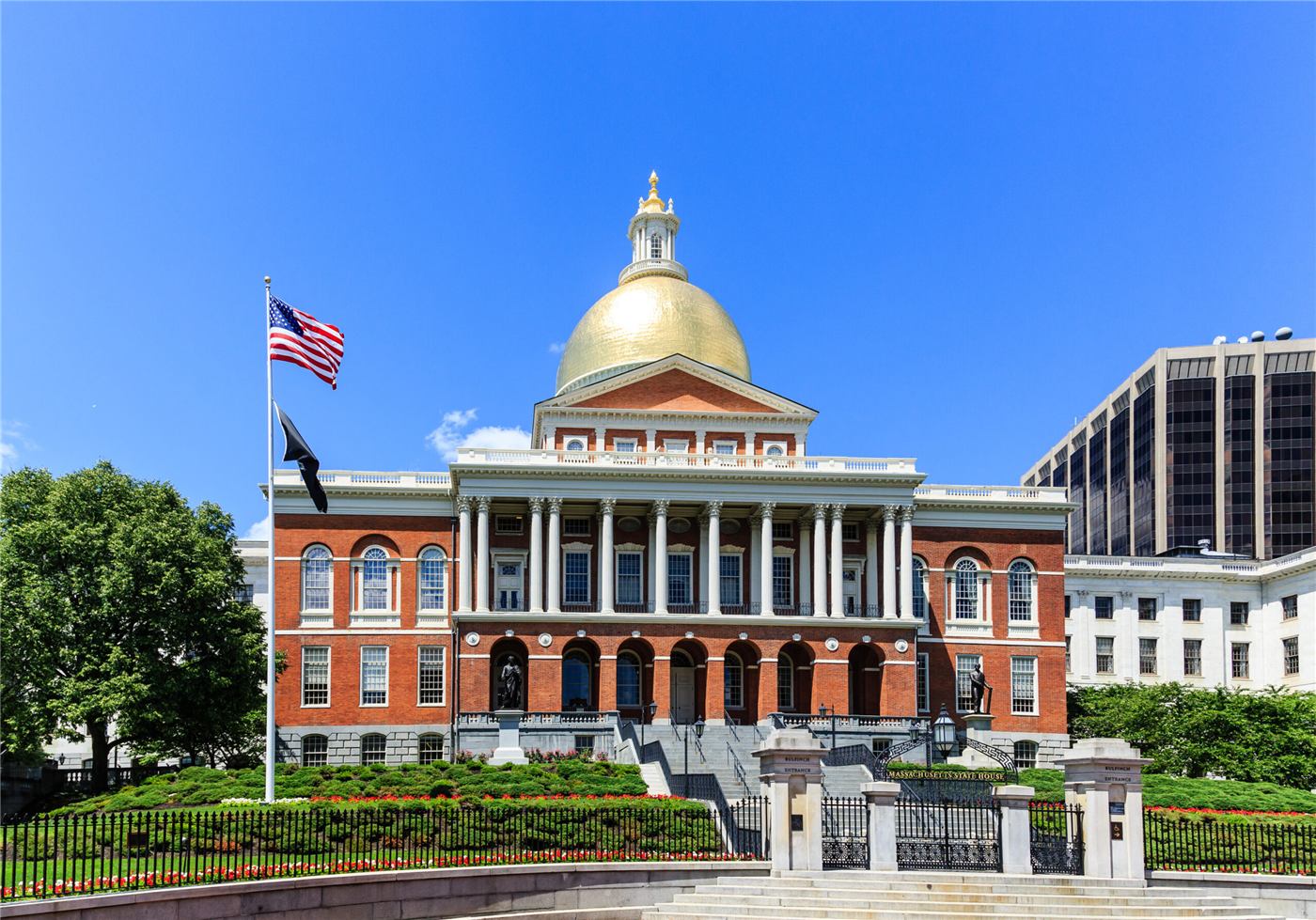
The gold dome you keep spotting from across the city belongs to the Massachusetts State House, finished in 1798 to a design by Charles Bulfinch and still where the Commonwealth argues with itself. It sits at the top of Beacon Hill overlooking the Common, which is exactly where a state that thinks this much of itself would put it.
Bulfinch’s crown
Charles Bulfinch designed the State House when the republic was new and American civic architecture was still an open question; his answer — red brick, white columns, a great dome above a hill — became a template for capitols across the country. The dome itself has a good backstory: shingled in wood at first, sheathed in copper by Paul Revere’s company in 1802, and finally gilded later in the nineteenth century. It still catches the late sun like nothing else on the skyline. The Freedom Trail’s red line passes the front lawn, but the building deserves more than a drive-by glance.
The Sacred Cod and other seriousness
Inside, past murals and marble staircases, the House of Representatives chamber keeps its most important artifact overhead: the Sacred Cod, a carved wooden codfish that has presided over debates for more than two centuries as a reminder of the fishery that built Massachusetts. Legislators take it seriously enough that its one famous student kidnapping threw the chamber into an uproar until the fish came home. Free guided tours run on weekdays and cover the chambers, the art, and the actual machinery of state government — schedules bend around legislative business and security, so check the official page before a special trip.
The top of the hill
The site is half the point. Bulfinch set the building at the crest of Beacon Hill, looking down over Boston Common — government, park, and city in a single glance from the front steps. Directly across Beacon Street stands one of America’s great works of public sculpture: Augustus Saint-Gaudens’s bronze memorial to Robert Gould Shaw and the 54th Massachusetts Regiment, among the first Black regiments raised in the Civil War. Give it the unhurried minutes it deserves before the gas lamps of Beacon Hill pull you downhill.
Know before you go
- Getting there: Park Street station (Red and Green Lines), then a short climb along the edge of the Common. Check live T status before you head out.
- Tours are free: weekday guided tours cost nothing, but times shift with legislative sessions — confirm on the official page before a special trip.
- It is a working building: expect a security screening on the way in, and with good timing you can watch a session from the public gallery.
- No tour, no problem: the dome, the front steps, and the Shaw Memorial make the stop worthwhile even when the interior is closed.
Pair it with
The Explore Boston newsletter
Know the city like you live here
Every morning at 6:30, the Explore Boston daily covers the city’s news, events, and weekends — the classics and the brand-new alike. Free, seven mornings a week.
Join 7,500+ Bostonians · one short email a day · unsubscribe anytime