
Walk the Emerald Necklace
Frederick Law Olmsted threaded 1,100 acres of parkland into one continuous green chain across Boston — and every acre of it is free.
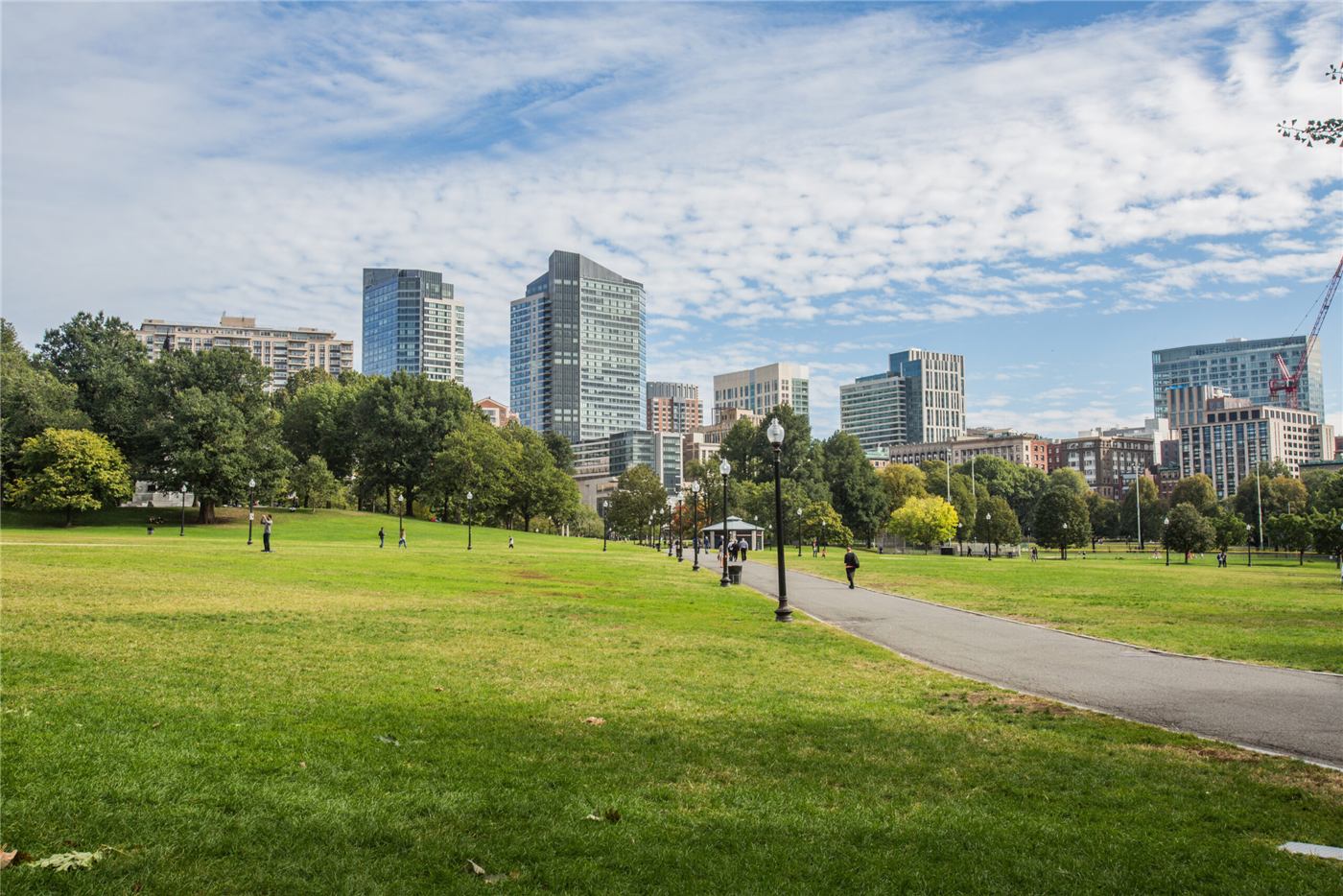
Boston’s famous parks look like separate destinations on a map — the Common downtown, the Fens by the ballpark, the Arboretum out past Jamaica Plain. They are actually one design: the Emerald Necklace, a connected chain of green laid out in the nineteenth century that you can still walk end to end without paying a cent.
One park, seven miles long
The chain starts downtown with Boston Common — grazing land in the 1630s, the country’s oldest public park — and the Public Garden next door, America’s first public botanical garden. From there the Commonwealth Avenue Mall carries you down a stately corridor of trees and statues to the Back Bay Fens, and the route bends southwest through the Riverway and Olmsted Park to Jamaica Pond, the Arnold Arboretum, and finally Franklin Park. Frederick Law Olmsted designed the chain in the late nineteenth century so that people — and birds, and water — could move through the city along a corridor of green.
The stretches most visitors miss
Everyone finds the Common. Fewer make it to the Fens, where community victory gardens dating to World War II are still tended plot by plot and the Kelleher Rose Garden blooms behind its hedges, a foul ball from Fenway Park. Farther out, Jamaica Pond is a glacial kettle pond with a level loop path made for unhurried laps, and the Arnold Arboretum — run by Harvard, open to all — is a living museum of trees with real hills and long views. Franklin Park, the chain’s far end, is its biggest landscape: woodlands, rocky outcrops, and room to roam.
Walk a link or ride the whole chain
You do not need to do all seven miles. Pick a segment — the Fens on a Fenway day, or the Pond-to-Arboretum stretch for a half-day of water and trees — or rent a bike and ride the chain end to end; a few ready-made routes live in our itineraries. There is no gate and no ticket anywhere along the way, in any season: fall foliage and the Arboretum’s spring bloom are the showpieces, but the Necklace earns its keep year-round.
Know before you go
- All of it is free: every park in the chain, the Harvard-run Arnold Arboretum included, is open to everyone with no admission anywhere.
- The scale: about 1,100 acres and roughly seven miles from Boston Common to Franklin Park.
- Getting there: Green Line stops thread the downtown-to-Fens stretch; the Orange Line serves the Arboretum end. Check live T status before you set out.
- Best single half-day: Jamaica Pond plus the Arboretum — water, hills, and trees, with Jamaica Plain’s coffee and food a short walk away.
Pair it with
The Explore Boston newsletter
Know the city like you live here
Every morning at 6:30, the Explore Boston daily covers the city’s news, events, and weekends — the classics and the brand-new alike. Free, seven mornings a week.
Join 7,500+ Bostonians · one short email a day · unsubscribe anytime