
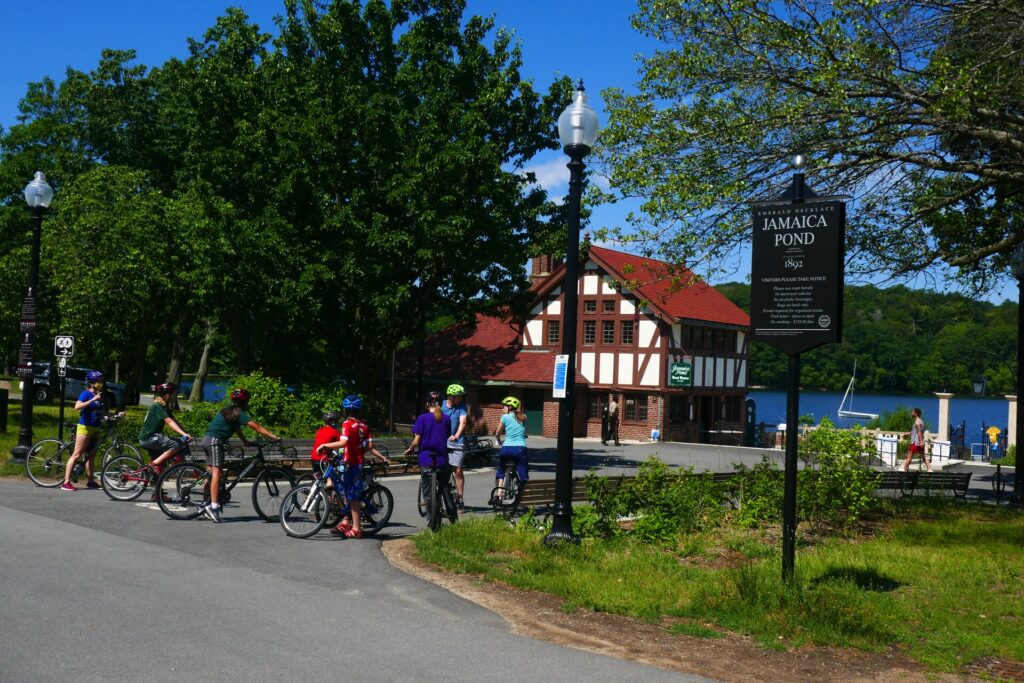
Jamaica Plain is Boston’s green, progressive heart, framed by Jamaica Pond and the Arnold Arboretum and known for its independent shops, cafés, and strong community spirit.
Nestled between Roxbury, Brookline, and West Roxbury, Jamaica Plain feels like Boston’s living room, a relaxed, leafy district where historic houses, independent shops, and remarkable parks come together. Often called JP by locals, the neighborhood has a long history as a streetcar suburb and a summertime retreat for well-off Bostonians, and today it is known for its diversity, progressive politics, and strong community activism.
Jamaica Plain’s geography is dominated by green space. The northern edge is shaped by Jamaica Pond, a deep kettle pond surrounded by a popular walking path and boathouse that offers rentals in warm weather. To the northwest lies the Arnold Arboretum, part of Frederick Law Olmsted’s Emerald Necklace, with miles of paths winding through curated collections of trees and shrubs. To the south, Forest Hills Cemetery combines monumental sculpture, winding roads, and quiet ponds, and is as much landscaped park as burial ground. Together, these spaces give the neighborhood a parkland frame that is rare in a major city.
The commercial heart of JP is Centre Street. Here, independent cafés, bookstores, thrift shops, groceries, and restaurants line a walkable main street that feels distinctly local. Many businesses advertise organic or fair trade products, publicize community meetings in their windows, and support local arts events. The Latin Quarter along Centre and nearby streets highlights the neighborhood’s large Latin American population with taquerias, pupuserias, and music that spills out of storefronts during festivals.
Housing in Jamaica Plain is varied, which helps support a wide mix of residents. Gracious Victorian homes with porches and gardens line certain hills and rotary-adjacent streets, while classic Boston triple-deckers, brick apartment blocks, and newer condominiums fill other parts of the neighborhood. Long-standing public and affordable housing developments sit near newer market-rate buildings, and the tension between rising prices and the desire to maintain economic diversity is a constant theme in neighborhood conversation.
JP’s cultural life is active and politically engaged. Community organizations sponsor farmers markets, LGBTQ pride events, and neighborhood cleanups. Local theaters and music venues host independent productions and live performances. The neighborhood has a reputation within Boston as a place of environmental awareness, cycling advocacy, and inclusive social values, which reinforces its appeal to artists, young families, and long-time residents who share those priorities.
For travelers, Jamaica Plain offers a very different feel from downtown. It is an excellent choice if you enjoy long walks in parks, browsing used bookstores, or spending an afternoon in a café where most of the customers live nearby. The Orange Line and several bus routes connect JP to central Boston, and bike paths provide scenic routes for those who prefer to pedal. Visiting Jamaica Plain gives a sense of Boston as a livable city of neighborhoods, not only a collection of historic sites.
Make a day of it
Loop the Pond, then Centre Street — JP pairs naturally with Roslindale through the Arboretum or Mission Hill down the Jamaicaway.
Explore the neighborhood