
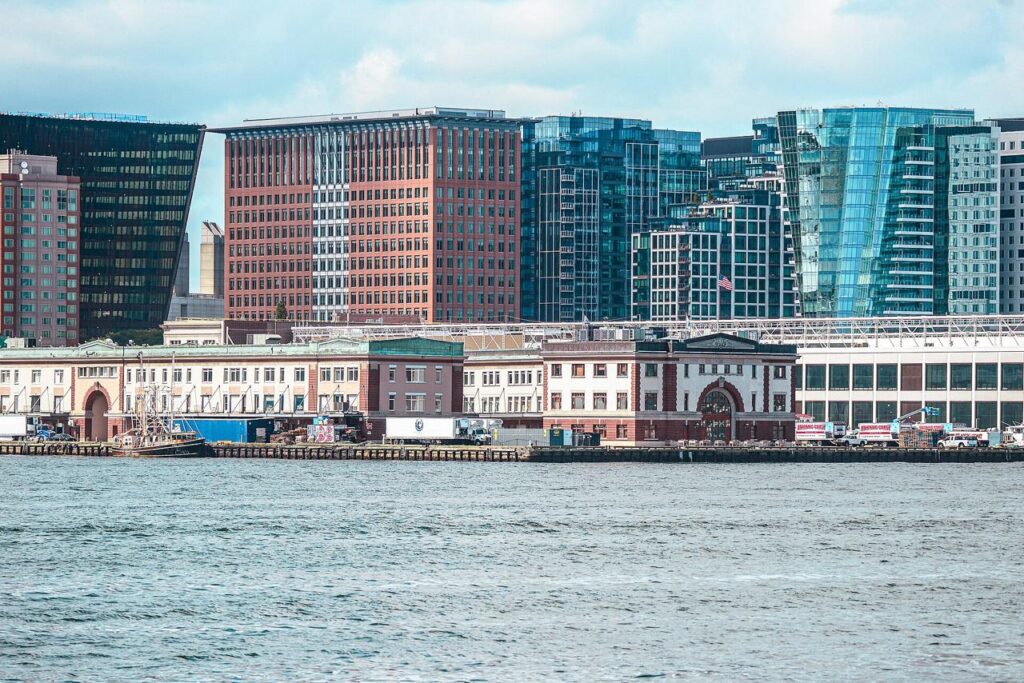
The Seaport District is Boston’s newest waterfront neighborhood, defined by harbor views, wide sidewalks, modern towers, and a busy mix of dining, hotels, offices, and cultural destinations.
The Seaport District is where Boston shows its newest face. For much of the twentieth century, this waterfront was dominated by warehouses, underused piers, and large expanses of parking. In recent decades, it has been transformed into a dense district of residences, hotels, restaurants, offices, and cultural institutions that look and feel very different from Boston’s older neighborhoods.
Approaching from downtown, the shift is immediate. Instead of narrow streets and older building stock, the Seaport is built around broader sidewalks, open plazas, and modern architecture oriented toward water and skyline views. Public seating, landscaped pockets, and waterfront-facing design make the area feel planned for strolling and gathering.
Dining and nightlife are major draws, with everything from casual seafood spots and food-hall energy to high-end dining rooms that lean into the harbor setting. The district also has a strong cultural anchor in the Institute of Contemporary Art, set on the water with dramatic modern architecture and rotating contemporary exhibitions.
Public access to the shoreline is a defining feature of the Seaport’s redevelopment. The Harborwalk threads through the district, connecting piers, viewing points, and small parks along the edge of Boston Harbor. Nearby, the Boston Convention and Exhibition Center brings waves of visitors for conferences and events, adding to the district’s reputation as a business-and-innovation hub while keeping the area active well beyond office hours.
The Seaport can feel less intimate than older parts of Boston, in part because so much of it was built quickly and fewer historic structures anchor the streetscape. For many visitors, that contrast is part of the appeal: a modern waterfront district that shows how Boston is continuing to evolve.
Make a day of it
ICA galleries, then the Harborwalk — pair the Seaport with South Boston’s Castle Island or cross the channel to the Wharf District.