
The Wharf District lines downtown’s harbor edge with historic piers, the New England Aquarium, ferries, seafood restaurants, and parks that turn Boston’s working waterfront into a lively front yard.
Along the downtown waterfront between the Financial District and the North End, the Wharf District presents Boston’s face to the harbor. This area, sometimes referred to as the Downtown Waterfront, includes a series of historic and modern wharves such as Long Wharf, Central Wharf, and Rowes Wharf, along with the New England Aquarium, ferry terminals, hotels, and segments of the Rose Kennedy Greenway.
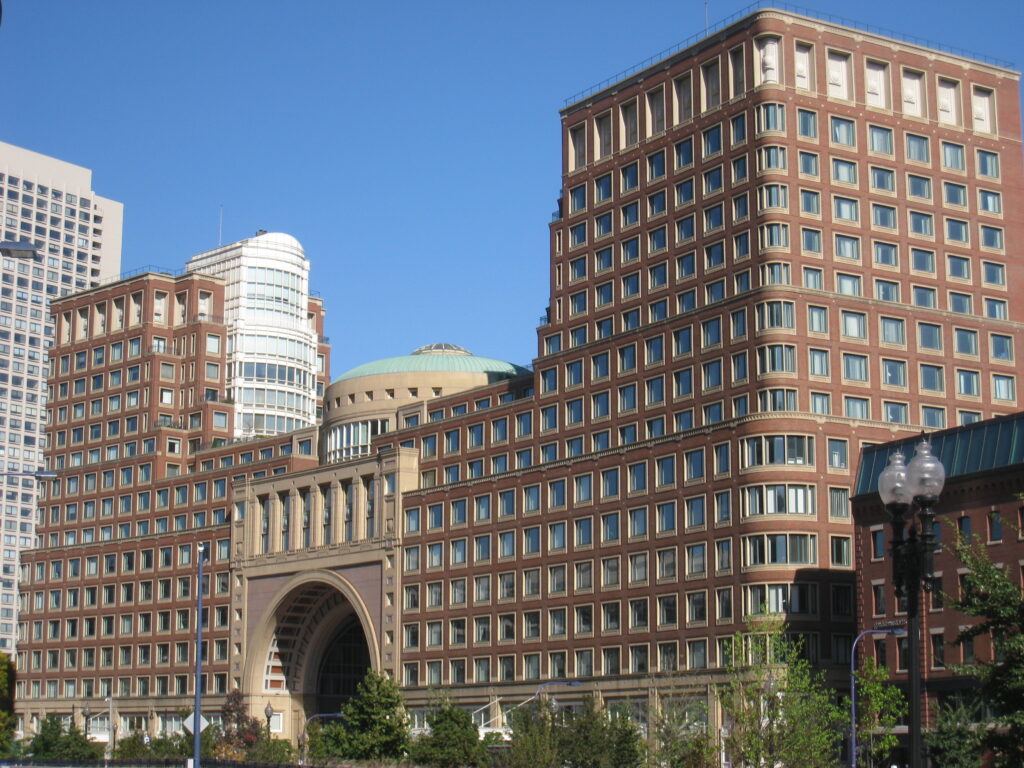
Historically, these wharves were the lifeblood of Boston’s maritime commerce. Ships from Europe, the Caribbean, and other ports unloaded cargo at their piers, and warehouses bustled with activity. Over time, as shipping shifted to larger container facilities elsewhere in the harbor, many of the original structures were repurposed. Today, brick warehouses have been converted into restaurants, offices, and residences, while newer buildings such as the arched facade of Rowes Wharf create a more contemporary waterfront skyline.
The Wharf District is now a place where locals and visitors come to experience the harbor rather than to load cargo. The New England Aquarium and adjacent Simons Theatre draw families and school groups year-round, offering encounters with marine life and exhibits about ocean conservation. Nearby, tour operators run harbor cruises, whale-watching excursions, and ferries to the Harbor Islands, which depart from Long Wharf and other nearby piers. On a busy summer day, the waterfront buzzes with lines of passengers, street performers, and the constant movement of boats.
Along the inland edge, the Rose Kennedy Greenway provides a linear park that replaced the elevated Central Artery. Here, lawns, gardens, fountains, and public art installations offer breathing space between the city and the sea. Food trucks line up at popular spots in warm months, and rotating art pieces give regular visitors something new to explore. Walking paths connect seamlessly to the North End, Financial District, and Seaport, making the Wharf District part of a continuous waterfront experience.
Dining options reflect the area’s dual role as tourist hub and gathering place for locals. Seafood restaurants with harbor views sit beside more casual pubs and cafés. Outdoor seating is common in good weather, and the combination of water, passing boats, and city skyline creates a memorable setting for a meal or drink.
For travelers, the Wharf District is both destination and crossroads. Many visitors encounter it as the gateway to the aquarium or ferry terminals, but it is worth taking time to stroll its length, from the custom house towers near Long Wharf to the more sheltered curve of Rowes Wharf. The Blue and Orange Lines stop nearby, and the area is only a short walk from Faneuil Hall, the North End, and the Financial District. Experiencing the Wharf District completes the picture of Boston as a historic port city that has turned its working waterfront into a lively public front yard.
Vibe: Lively waterfront strip; ferries, aquarium crowds, seafood decks, and Greenway lawns facing Boston Harbor.
Make a day of it
Aquarium, Harborwalk, harbor breeze — pair the Wharf District with the North End one block up, or catch a Harbor Islands ferry from Long Wharf.
Explore the neighborhood