
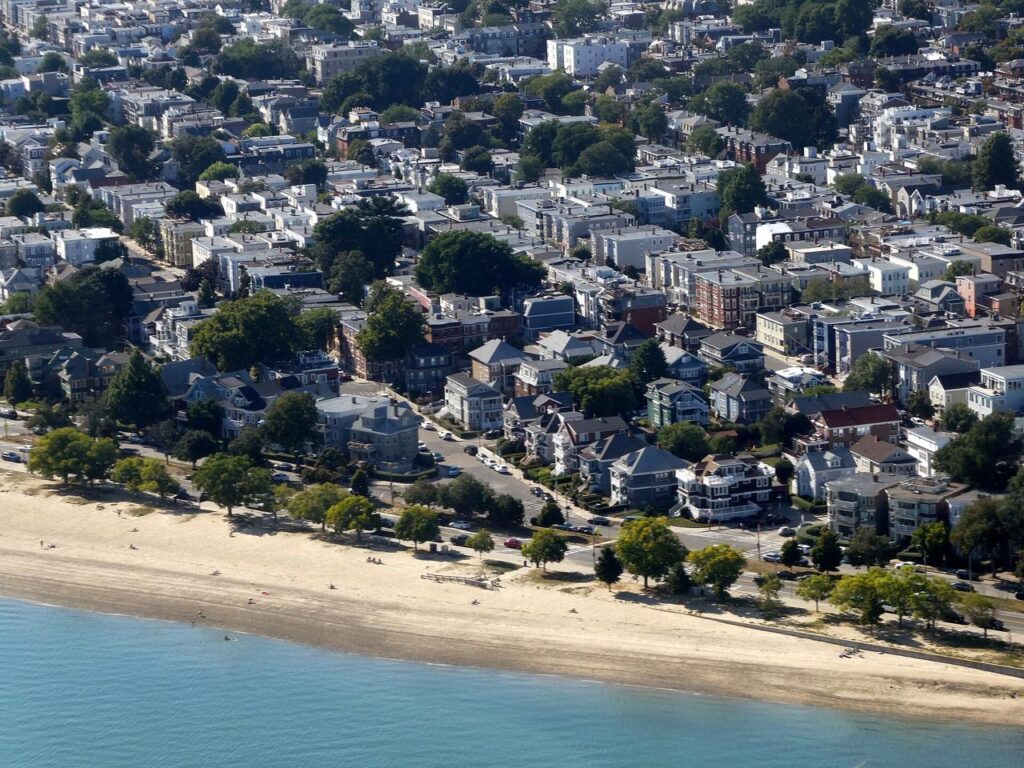
South Boston, or Southie, balances close-knit, triple-decker streets and long-standing neighborhood traditions with beaches, harbor walks, and some of the best waterfront scenery in the city.
Extending southeast from Fort Point Channel to Castle Island and Dorchester Bay, South Boston is an urban neighborhood with a strong sense of identity and history. Known locally as Southie, it has long been associated with its Irish American community, waterfront views, and tightly knit social networks, while in recent decades it has also become a magnet for young professionals and families drawn by its beaches and proximity to downtown.
Classic South Boston is built on a grid of narrow streets lined with triple-decker houses and rowhouses, many painted in muted New England colors. Local bars, bakeries, and small markets punctuate these residential blocks, especially along Broadway, which functions as a central commercial artery. Decorative flags, memorials to veterans, and long-running neighborhood institutions speak to South Boston’s civic pride and deep local roots.
The waterfront shapes much of South Boston’s character. Castle Island and the adjacent beaches of Carson and M Street attract swimmers, walkers, and families throughout the warmer months. A paved path traces the edge of the bay, offering uninterrupted views of Boston Harbor, the harbor islands, and passing ships. Fort Independence, located on Castle Island, provides a tangible link to earlier chapters of Boston’s coastal defense.
South Boston’s culture has been portrayed extensively in film and literature, often focusing on its working-class roots and political history. In reality, the neighborhood today is more complex. Rising housing costs have reshaped demographics, bringing in new residents while raising concerns about displacement and affordability. Yet neighborhood traditions remain highly visible year-round, and South Boston continues to feel like a place with its own rhythm and strong sense of community.
Make a day of it
Castle Island and the beaches — pair Southie with the Seaport’s ICA, or follow the shore toward Dorchester and the JFK Library.
Explore the neighborhood